
Spider-Man’s back! Once again, the web crawler is dominating the movies and, obviously, our hearts with his arachnoid abilities. The natural next move is to take the web-slinging from the theater to the tabletop with a look at the best Spider-Man board games out there.
Now, at first glance, this is a messy proposition – see, Spider-Man’s had a bevy of games, the vast majority being licensed family fare (nothin’ wrong with that). There’s Monopoly, Yahtzee, and all the usual suspects. Somehow, Talisman hasn’t adapted the Spider-verse yet (give them time!).
But while Batman has several big hobby titles, Spidey (and, to be fair, just about every other non-Bats superhero) gets tossed into medley efforts. Far from a super slurry, though, the games below are excellent, offering different ways to suit up with Spidey and his friends (both amazing and otherwise – there’s a Disney Junior joke for the parents in the room) to battle villains and each other across all kinds of cardboard. We’re taking a look at four great options below, covering the range from light to heavy, cooperative to competitive.
So fuel up your web shooters and let’s get swinging!
Marvel United
We start with a long-running crowdfunded success: Marvel United is fun, colorful, and cute. The Chibi art style renders the vast Marvel universe into delightful 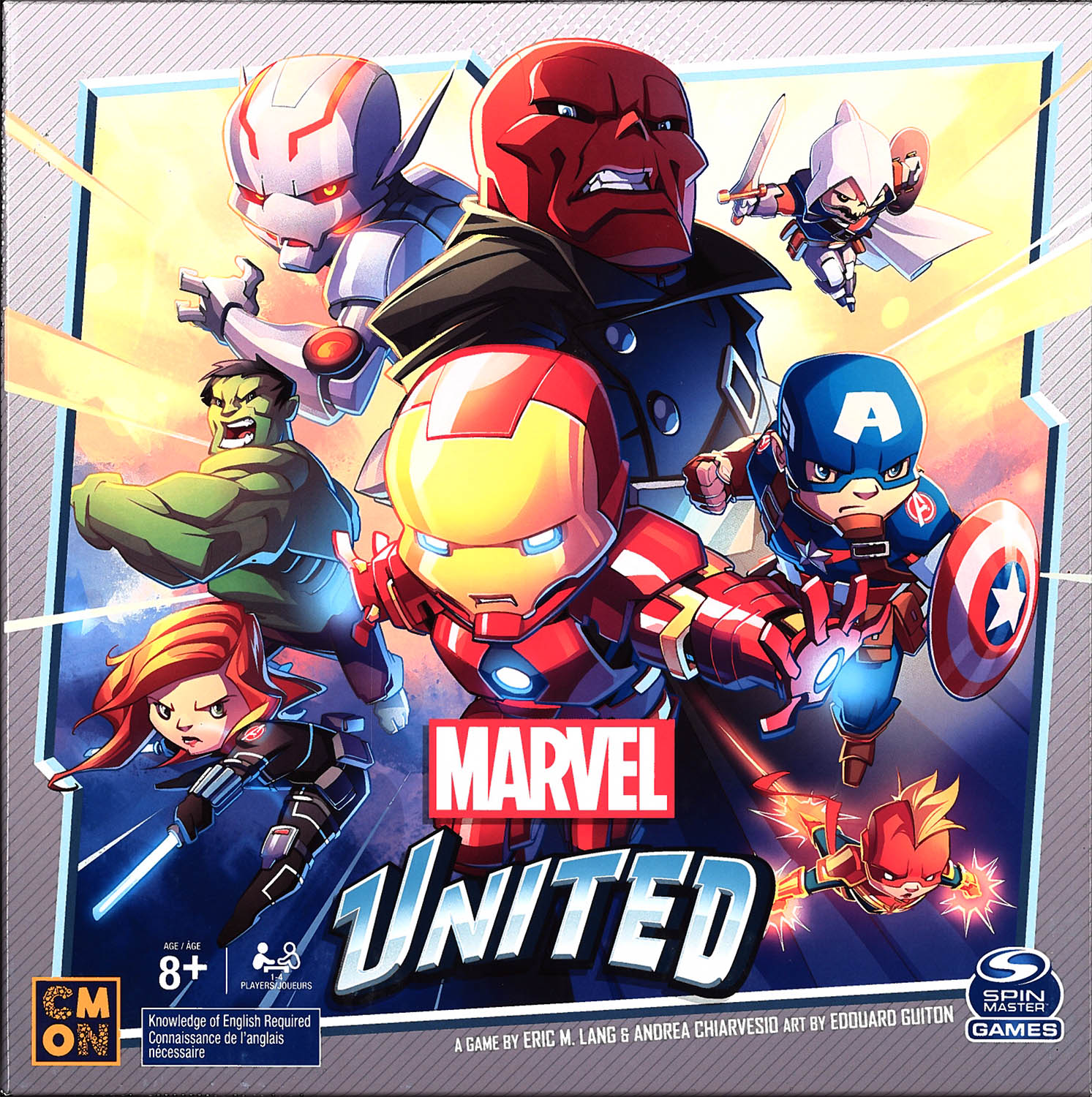 figures and artwork, which you’ll see plenty of as you assemble teams to take on villains. The game itself is rules-light but tactically fun, as every hero must use their unique abilities to deal with a board covered in threats. You and your pals must stop nefarious schemes by playing cards, darting around locations, battling enemies, and aiding your pals.
Because Marvel United is fully cooperative, the vibe feels a bit like bizarro Pandemic, where you’re managing threats by using your cards in the most optimized fashion. Those cards often directly help your allies, and feel heroic in the moment – Spider-Man is taking out a henchman or saving civilians, freeing up the Hulk to smash the big bad. Your success drives the villain to worse acts as the game goes on, adding novel twists and ensuring a certain victory is never quite as locked in as you’d hope.
Spider-Man shows up right from the get-go, but beyond the base game, spider-maniacs should hunt down the Spider-Geddon expansion, which throws in several ridiculous deep-cuts from the extended Spiderverse (including Nic Cage’s newest role, Spider-Man Noir). You’ll also want to face down the Sinister Six for an epic challenge.
Yet, what makes Marvel United great for its weight is its time – this is an hour or less adventure, often coming in at 30 minutes for experienced players. That makes it ideal for kids, and takes the sting out of a villain who gets a lucky run (or demands a different hero mix). You can reset a session in moments, grab a new hero and their deck, and get back at it. If you want a Spider-Man game that’s playable any night of the week with anybody, even J. Jonah Jameson, Marvel United is it.
Marvel Legendary
Next we’re hitting a pure deck-builder in Legendary, a system that’s spawned numerous variations but had its start in 2012 with a core set of Marvel superheroes. Was Spidey in that set? You better believe he was. Pretty solid too, provided you comboed him well with someone else.
See, Legendary hits all the deck-builder notes: you’ll recruit cards from a shared market (cards, here, being ‘heroes’ with different abilities) and use those same cards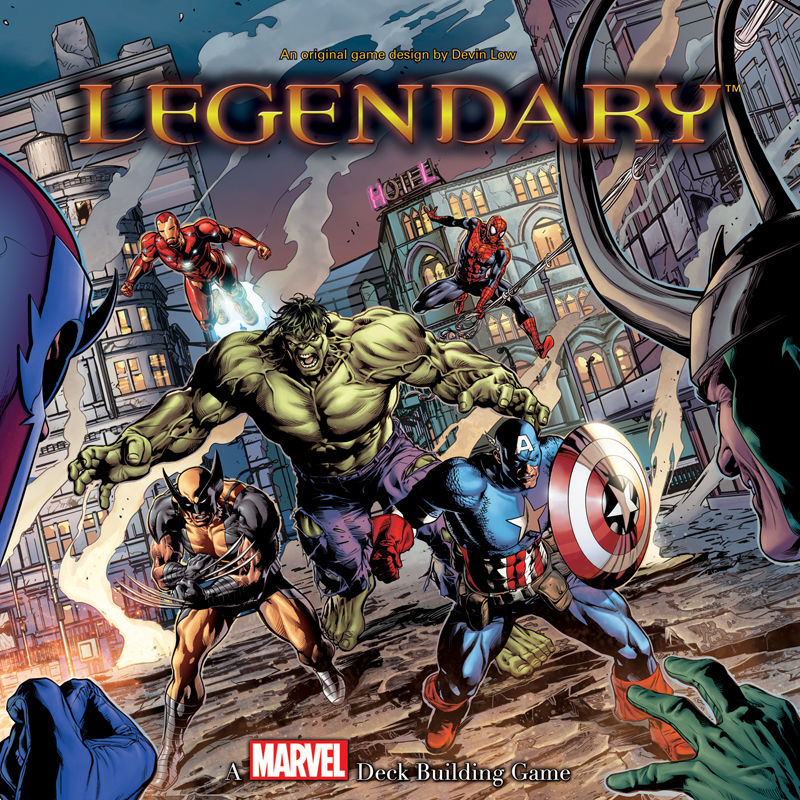 to either recruit more heroes or defeat henchman and the Mastermind (Red Skull, Loki, Magneto, etc.). Unlike in some deck-builders, like Harry Potter, you’re not taking ‘hits’ directly here, but rather lose as the Mastermind advances their schemes or sees enough damage done to the city via escaping enemies and their civilian hostages. Effective play sees you hitting color-based combos to achieve bonus effects, damage multipliers, and, yes, card draws.
What makes Legendary work so well is its hero variety – they all feel right (Hulk, for example, will be smashing all the time), and how necessary that variety is for victory. Because the different villains and henchmen bring so much to the table when they spawn, escape, or combo off each other, you’ll need to work together to ensure you can rescue civilians and pump up enough damage to scratch the villain. At the same time, that shared market might mean passing on a hero that’s great for you but fantastic for your buddy.
And then you throw in the full rules that have players scoring individual points for their efforts, and now you have a really dynamic affair. You might just take that good hero this time, dooming your ally to a less effective turn so you come out on top (of course, if the villain wins, everyone loses, so you can’t throw the game). It’s great fun that plays in an hour or so with an experienced group, and is far from the most complicated deck-builder out there.
The best part? Before this year, I’d have put the caveat that Legendary could be somewhat hard to find, but in 2026 there’s a new 2nd Edition that remasters the core set, adding a fresh coat of paint, updating cards (speaking of Spidey, Miles Morales is now included in the base box) and more. That 2nd edition keeps its compatibility with every other Legendary expansion too, of which there are many. This, folks, is the proper way to do a new edition.
Marvel Champions
We’ve hit on Marvel Champions a few times now, because it remains a high quality experience up there with Arkham Horror as Fantasy Flight Games’ marquis franchises (fine, Twilight Imperium, you can be at the podium too). When it comes to Spider-Man though, and Miles Morales, Spider-Woman, Ghost Spider, Spider-Ham, and countless others, Marvel Champions stands alone in letting you truly craft these characters to be the Spidey board game you’re looking for.
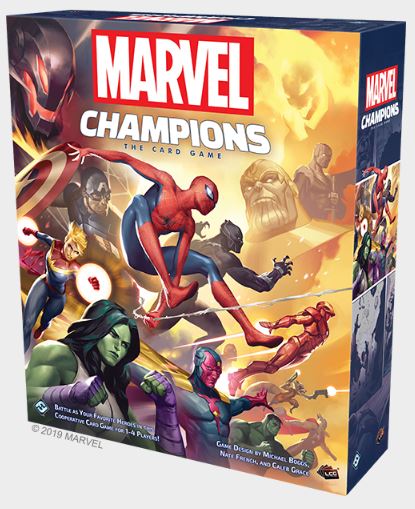 Every match sees you and your friends, having built your own or using a pre-constructed hero deck, take on a villain and their myriad ways to make your life miserable. Players take their turns, then the villain gets a crack, building threat, gathering goons, and generally being awful. Marvel Champions uses its card-driven world to the fullest, adding in all kinds of great ideas to make heroes play like themselves. This especially comes through in the secret identity mechanic, where you’ll need to play turns as Peter Parker to recover and develop new spidey gear. Yet, taking off the costume has to be done with strategy in mind, as if the villain can’t find anyone to smack around, they’ll advance their devious schemes even faster.
The difficulty in Marvel Champions is a notch higher than Legendary or United, and you’ll readily lose if you’re not tuning into what your hero does well (or what the villain requires – some match-ups are destined to be doomed). But should the cards not fall your way, it’s easy to try a different deck setup or swap to another hero. Champions also plays great either true or two-handed solo. There’s a lot of content here to explore too, much of it great (the mini-campaigns, in particular, are perfect small-box adventures to crack over a weekend or two).
Still, if you’ve not given Champions a try, let your love of Spider-Man swing through that door (he’s in the core set, after all).
Marvel Crisis Protocol
We close with a different sort of game – tactical miniatures skirmisher Marvel: Crisis Protocol. Like Champions, this is a long-running game from Asmodee and Atomic Mass Games that features the mini gamut: assembly, painting, army points, factions, and more. The core mode matches similar games like Warhammer: Kill Team, Star Wars: Shatterpoint, and Infinity. You’ll square off against an opponent with 3-5 superheroes, slap some terrain on the board, and pick a scenario. You might be rescuing civilians outside the Daily Bugle or dealing with incoming asteroids.
Or just beating the tar out of your enemy.
Crisis Protocol lets you inhabit a different style of Spider-Man – one focused on movement, where his web abilities and super strength both slow enemies down and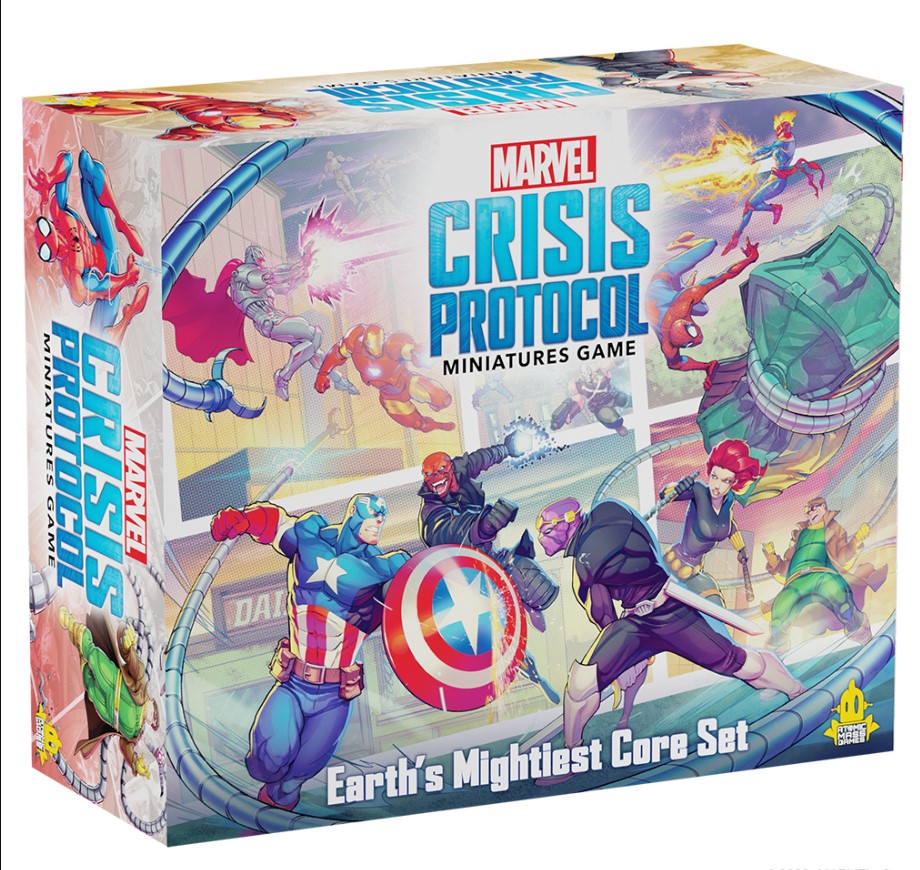 let you, ya know, chuck cars at them. Destructible terrain is a huge part of Crisis Protocol, as is using it to obliterate your enemies. Couple that with an excellent ‘comeback’ system, where a hero that gets downed flips their board over and gains (and loses) abilities. It’s a classic comic book moment, from the edge of defeat to stirring vengeance rendered so very well on the tabletop.
Spider-Man gets his own faction, the Web Warriors, here. Bring enough of them into battle and you get bonuses, a nice reward for playing thematically. What’s more, Atomic Mass has been paying attention, and while Crisis Protocol is perfectly fine to play solo (no AI – just playing both sides), there’s not been a good cooperative version. That changes in September of this year, when Spider-Man gets his moment with the first entry in the Alliances line: Night of the Goblin, a cooperative beat’em up that leverages Crisis Protocol rules.
Next up there? The X-Men.


