
Before Legion Wargames was a publisher, it was a man with a pile of counter sheets and a rotary cutter. Company founder Randy Lein will tell you plainly that he backed into publishing. It started as a hobby, something to fill his free time and put his love of graphics to work.
“I started doing modules for a small desktop publishing game company called Khyber Pass Games,” he explains. “In those days we were doing pre-orders on desktop-published games, and I would mount the counter sheets to cardboard and hand-cut them with a rotary cutter. I must have cut 300,000 – 400,000 counters that way.”
When Khyber Pass eventually dissolved, Randy bought up what remained of the catalog and founded Legion Wargames in 2009.
“I knew all the production since I had been doing it,” Randy says, “and I had a good handle on shipping and production. So I figured, why not?”
Randy is quick to admit he didn’t fully grasp the scope of what he was getting into. But that turned out to be an advantage.
“It made money, but it wasn’t my full-time employment,” Randy says. “There was no pressure of ‘we have to release a game or we can’t pay the mortgage.’”
That freedom, it turns out, also shaped the kinds of games Legion would publish.
Beyond Barbarossa and the Bulge
From the beginning, Legion Wargames was willing to produce titles that covered territory the major publishers weren’t interested in.
“If someone had a mainstream topic, it would go to GMT, MMP, or Compass,” Randy says. “People would come to me with other things, often first-time designers. And it worked well. I wasn’t trying to produce another Bulge game, another Barbarossa game. It’s satisfying to contribute to the hobby in a different way.”
One strong example of Legion’s approach is the game All Are Brothers: The Battle of Solferino, 1859. Solferino was the last major engagement in which all armies were personally commanded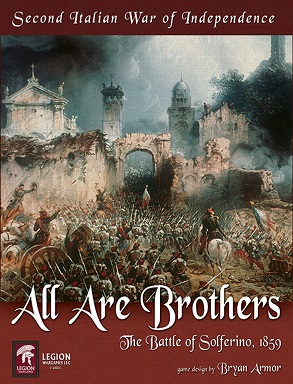 by their monarchs. The carnage was so devastating it led directly to the founding of the International Red Cross and the establishment of the Geneva Convention.
Another game, A Glorious Chance: The Naval Struggle for Lake Ontario during the War of 1812, is a solitaire wargame focusing on an inland naval campaign between the U.S. and British forces. With the more well-known land war relegated to the background, the game focuses on the challenges of trying to manage your fleet across four months in the summer of 1812.
These titles reflect a consistent Legion Wargames instinct. They cover historically significant conflicts the rest of the hobby has largely passed over.
“It sets me apart and I’ll continue doing it,” Randy adds, “though I won’t turn away a Bulge game if I think it deserves production.”
Good Games from Good Designers
For Randy, the answer to what makes a Legion Wargames game comes down to the people who design them.
Legion’s series of solitaire air games, designed by Steve Dixon, is one of their best-selling lines. Popular titles include Target for Today and Target for Tonight. Each game drops the player into the cockpit of a single aircraft, managing individual missions against the full weight of historical conditions, including enemy aircraft, mechanical failures, and the cumulative attrition of a bombing campaign.
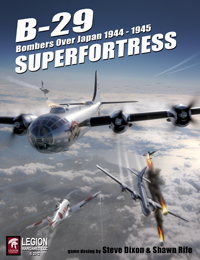 The first game in the series, B-29 Superfortress, goes all the way back to the very beginning of Legion Wargames itself.
“That was actually the first box game we did with Khyber Pass, and I later released a second edition under Legion,” Randy says. “Then came Hell Over Korea as an expansion, then Target for Today, which was huge — the first time I had nine pallets of games drop in the parking lot!”
Another designer who represents Legion’s philosophy is Kim Kanger, whose work on games like Dien Bien Phu: The Final Gamble represents the kind of thoughtful historical craft that Randy sees as the heart of what Legion publishes.
“Dien Bien Phu is the definitive game on that battle,” Randy says, “not because it’s bigger, but because the mechanics are right, the victory conditions are right, the supply handling is right. Kim is so meticulous that he does his own designing, developing, and now graphics too.”
Hands-On and High Quality
Nearly two decades into running Legion Wargames, the production side of the business remains as hands-on as it was when Randy was cutting counters with a rotary cutter.
“Yesterday my wife was putting components into the Ziploc bags,” Randy explains, “and this morning she was putting the games into mailers while I printed labels and she applied them. We still do that for most titles.”
Randy has used the same printer in Black River Falls, Wisconsin, since Legion started. He is direct about why high production standards matter.
“That’s the first thing a person sees when they buy a game. They pick it up and make a judgment. That applies to everything that goes in the box — it all has to be as top-notch as I can make it while producing and assembling here in the US.”
Some titles are now produced in China to manage the backlog and handle components that simply can’t be made domestically, but the standard Randy holds for those games is the same.
“Werewolf, which we released last year, had a 22×34 mounted map that nobody in the US will produce at any price. The manufacturer in China did a phenomenal job. The quality is right up there with anything GMT does.”
What’s Next
Legion Wargames is approaching its second decade as a company, and Randy Lein has no intention of slowing down.
“Right now, I’m playing catch-up and producing some games here in the US and some games in China in an attempt to speed up releases. The backlog of games is also being trimmed down with the assistance of a great developer who has taken a real shine to Legion Wargames — Terry Simo. Terry is a retired US Air Force officer and a man with tremendous knowledge of aviation and military history. Thanks to his efforts, we’ve got several games finished and ready to move into production,” he says.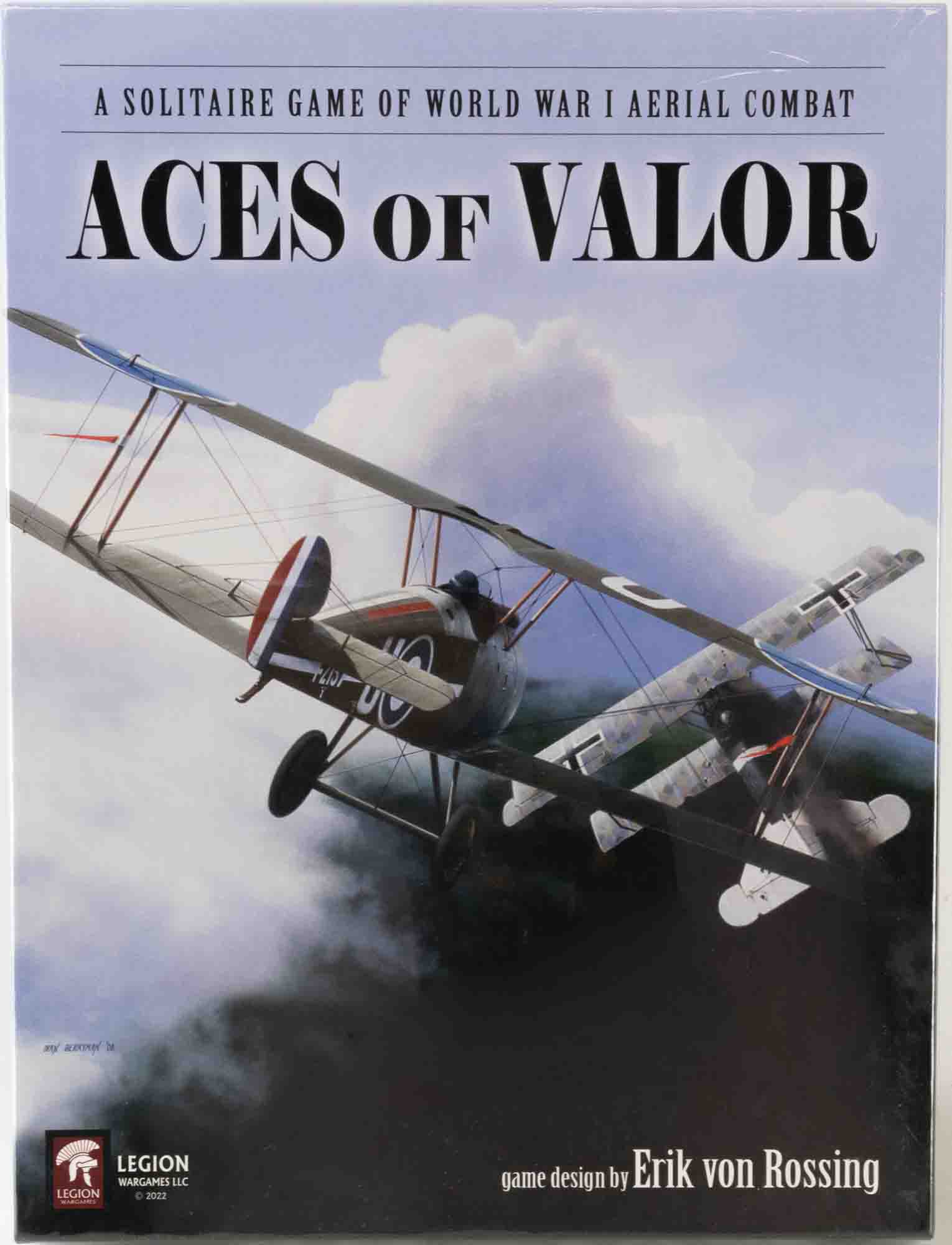
“I’m trying to take on games that can be produced in two to three years,” he says. “Once I get the pre-order list cleaned up, I’m not going to let it get that long again.”
And some relationships, Randy says, are simply ongoing commitments.”I will keep publishing any game Kim Kanger designs as well as anything from Steve Dixon,” Randy says. “And the 25 year old Napoleonic series, Vive l’Empereur by Didier Rouy (Pratzen Games) will continue to be published by Legion Wargames. In fact, Vol. XI, La Bataille de Wagram, is releasing this year
In addition to his plans for Legion Wargames, Randy is also developing a new brand, called Jackl Games. Jackl Games will focus on titles outside Legion’s traditional wargame catalog.
You can read the rest of our conversation with Randy Lein below.
A Few Questions with Legion Wargames
What would you say makes a game feel like a Legion game?
It’s a topic that’s not normally gamed — with some exceptions. I’m looking at Lobositz and Wagram on the shelf, and those battles have been done before, as well as all of the battles in the Vive l’Empereur series by Didier Rouy.
But as a general rule, it’s a subject you may not have seen before. The Maori Wars; there was one other game on it, but ours was far more detailed. Beyond topic, I’m not sure there’s anything else that truly sets us apart, because GMT, MMP, and Compass all have high-quality components. Topic is the main thing.
What surprised you most about how the hobby has responded to Legion over the years?
How long it took to get recognized. And there are still people in this small hobby who don’t know Legion Wargames exists. I always say there’s GMT, MMP, Compass, Worthington, and then somewhere down the list there’s me and Revolution Games, who are virtually the same in scale. I would go to conventions, and people would say, “I didn’t even know you existed.” I’m just not good at marketing. I don’t like doing it. I thought in a small hobby the Legion Wargames name would get recognized more naturally. That surprised me.
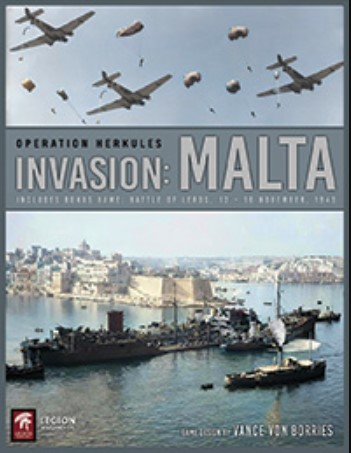 The other thing that surprised me is how many loyal Legionnaires there are. People say, “Oh, I’ve got 12 of your games.” I’ve published 44 titles, I think, and when people are doing video reviews, you’ll see a whole section of Legion Wargames titles on their shelves. There are people who just love this stuff. And since profit has never been my driving force, the fact that people genuinely enjoy what I’m putting out means a great deal.
One thing I’m especially proud of right now: we just released All Our Brothers, by a first-time designer, and The Player’s Aid is talking about putting it in their top 10 list for 2025. We’ve ended up on that list a couple of times, and I think we’ve been number one a couple of times too. They seem to have their thumb on the pulse of the hobby, so that always feels like a genuine validation.
If someone wanted to understand what Legion Wargames is all about, is there a title or two you’d point them to?
The best-selling games are Steve Dixon’s solitaire air series. It started with B29 Superfortress — GMT had passed on it, and someone suggested they ask Legion Wargames about it.
Steve also did Picket Duty, Skyhawk, and Doodlebugs, and he’s got three more on the pre-order list. If you’re into solitaire air games, it’s a phenomenal series. B29 and Hell Over Korea are out of print; Target for Today is down to its last few copies.
The other games that made people sit up and take notice of Legion are the Kim Kanger titles. He started with Ici, c’est la France, which covers the Algerian War of Independence, then Tonkin: The First Indochina War 1950 – 1954 (originally published in Vae Victis magazine). Then Dien Bien Phu: The Final Gamble, which is the definitive game on that battle…, followed by Nemesis, covering the 1944 Burma campaign. There’s also La Prominente, an Italian and British battles game from early WWII in Africa that we republished from Revolution Games.
And then All Are Brothers: the Battle of Solferino, is just a fantastic game. Solferino was the most horrific battle up to that point in history, and the suffering on that battlefield is what directly led to the founding of the Red Cross and the Geneva Convention. So there’s real weight to the subject.
Is there anything else you’d like to add?
Yes. In addition to Legion Wargames, I occasionally get submissions that are outside the wargame realm. It’s a little odd, given how many game companies exist, but I’ve looked at a couple and thought, “This is a good game, but it doesn’t fit Legion’s identity or customer base.” So, I’m launching a new brand: Jackl Games.
The first game is Heirs to Olympus. It’s a miniatures game each team has six miniatures, four teams total, with original sculpts and all hand-painted original artwork. Not computer-generated, not AI. Someone sitting down with pens, pencils, and brushes. It’s beautiful; you can see it all on the website.
I’ve also picked up More Brains!, a Herman Luttmann zombie game, which is in development. As well as a game from first-time designer John Quijada, Laboratory, set in the Cold War era, about scientists and skullduggery. Jackl Games is for titles that are great games but don’t belong in the Legion Wargames catalog. Think of it the way Honda has a luxury brand — Legion Wargames will have its family-friendly brand.
I’ve also got a Herman Luttmann zombie game in development. He did Dawn of the Zeds and a game called Laboratory, set in the Cold War, about scientists and skullduggery. Jackl Games is for titles that are great games but don’t belong in the Legion catalog. Think of it the way Honda has a luxury brand — Legion Wargames will have its family-friendly companion.
Thank you for your time, Randy. We look forward to seeing what comes next from Legion Wargames!


