
When staring across the vast landscape of war games, you’ll notice far fewer bother with future warfare, the conflicts that haven’t happened yet. This makes sense in two facets – one, historical battles can be measured against the design, either for fun or simulation value, and two, those same historical battles have ‘fans’, or folks interested in the engagement. In other words, you have an audience and a quality gauge. GMT’s Next War series, primarily designed by Mitchell Land, turns those elements into advantages in creating a deep, captivating hex-and-counter experience.
Taking place in the near future – we’re not talking mechs and spaceships here – Next War invites players to return to historical conflicts risen anew, like Korea and Iran, or bristling current tensions like India-Pakistan. In a sense, if you’ve played a conflict simulation from one of those theaters before, you’ll find a fresh perspective on familiar territory. You’ll also find a dedication to realism here, with meaningful objectives for both sides that account for force disparity, political realities, and the shape of each adversary. You can’t, say, just nuke the opposition into oblivion because that’s not a viable, realistic play.
Lastly, before we dig into the meat of Next War, it’s worth noting that, like the best war gaming systems, Next War is continuing to evolve with fresh releases, updates to living rules, and solid support for questions. This is a game series you can engage with, grow with, and find yourself captivated by, whether you’re playing solo or opposed.
How to play Next War
Any discussion of how to play Next War must start with two clarifications – first, Next War is not a beginner’s war game. There are many friendlier hex-and-counter outings for new players across a variety of settings, from The Blind Swords system to Salerno ‘43 or Men of Iron. These will help you grok the basics, understanding terms like Order of Battle, CRTs, navigating turn structure, and so on. Next War, like so many ‘complex’ war games builds on these foundations, and you’ll have a much better time jumping in with a few other games under your belt.
Second, Next War offers two complexity levels. The Standard Game rules pack a punch, but abstract a fair bit, keeping your game moving while not 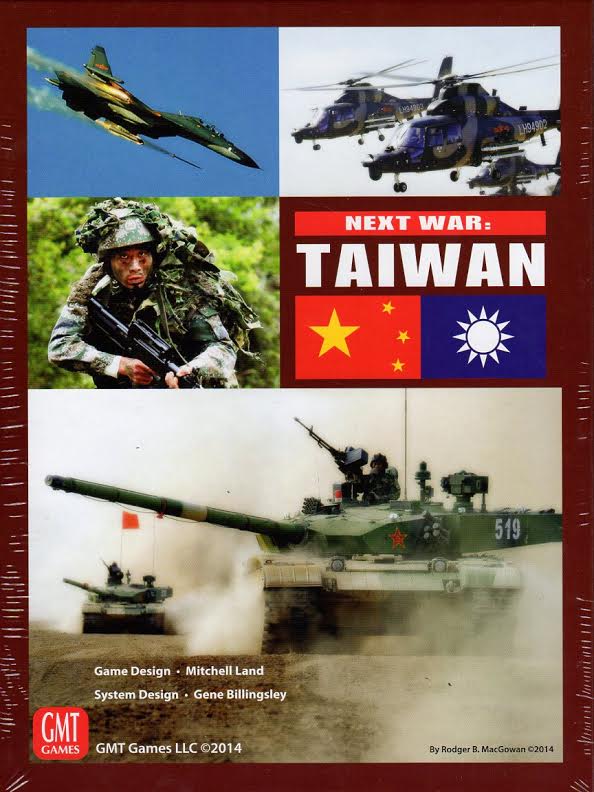 overwhelming you with minutiae. Take, for example, Next War: Taiwan. A Standard Game scenario might cover part of the island, letting you learn the game’s phases, understanding amphibious assaults, and gleaning some idea of strategies to use for the full campaign. Playing a few of these in your Next War copy is an essential way to smooth out the learning process – the game goes rather quick once you have the processes down, and leaving out layers at the start will keep Next War from being intimidating.
Which is a good thing, because the moment-to-moment gameplay here is a compelling mix. You begin every turn with common elements like weather resolution – those planes aren’t flying much in a storm – and initiative determination, before progressing step by step through special forces, air superiority, and political will (the international world may decide to chill out, or get involved, but their efforts are mercurial). A standard game will skip some of these, and you can choose which ones you want when playing with the Advanced game, though most come down to a few dice rolls with significant impacts. If, say, the US wants to commit more resources, then Taiwan (for example) will have more to work with in that turn and can be more aggressive. Otherwise, you might hunker down.
Next War facilitates this in most of its titles (see below for advice on where to start this series) through a strategic display that sits separate from the primary hex map. It’s a nice way to split out the two ‘theaters’ of action, almost like zooming in and zooming out. In Next War: Vietnam, for example, the strategic display includes aircraft carrier positioning, army holding boxes, the phase tracker, and so on. The functional bits that grease the wheels of the hex action taking place on the main map.
Once the early phases are burned through, you get to the I-Go-You-Go meat of Next War, where forces shift, slam, and try to take key territory. As with most modern warfare games, utilizing combined elements is key – taking airfields, for example, will let your helicopters have a more meaningful impact transporting troops to the war zone. Counters are stuffed with details, from pilot skill on aircraft to efficiency ratings on land units. It’s a full suite, with a CRT chock full of 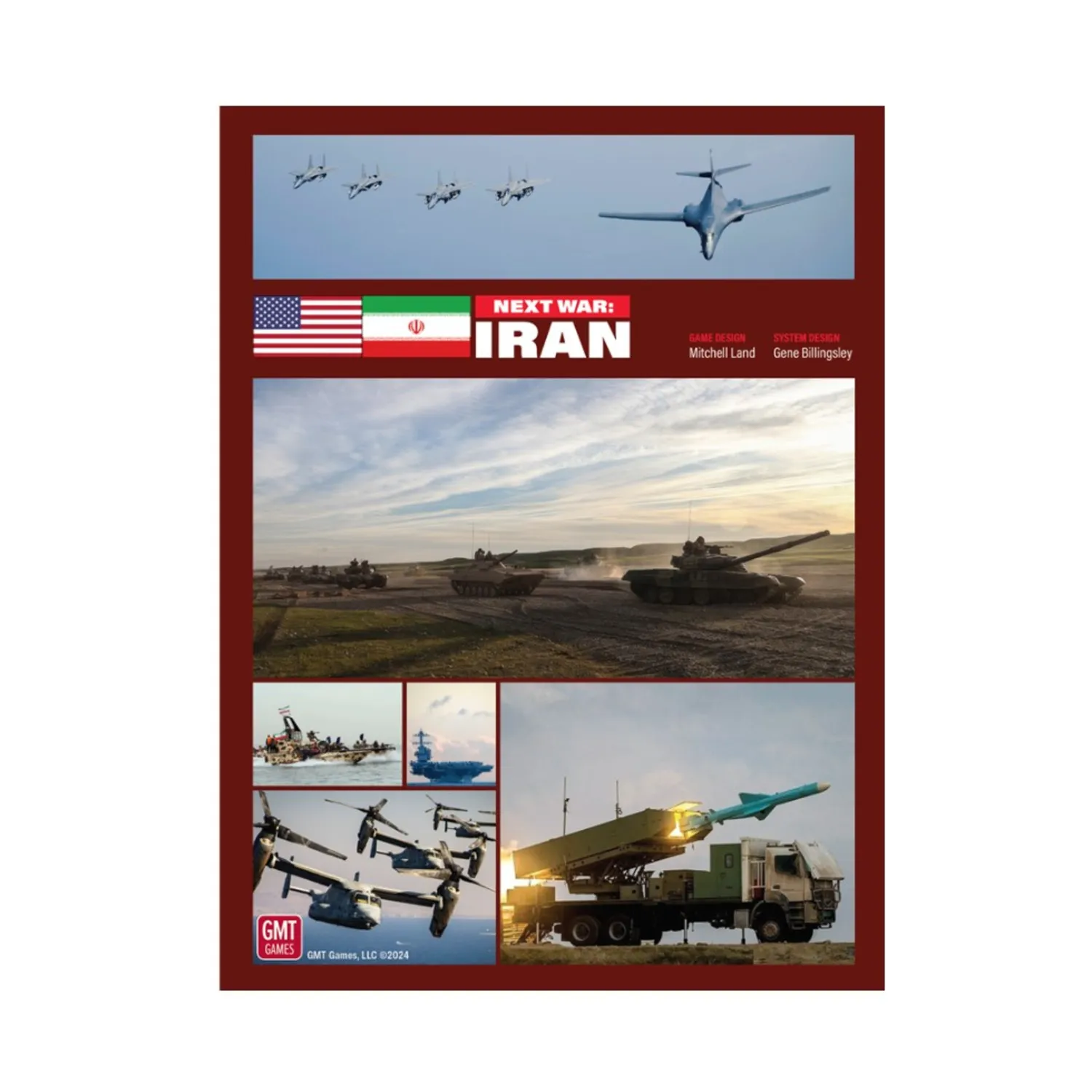 modifiers and an emphasis on bloody resolution, but, taken in chunks, this is a system that comes together well. Start with the smaller standard games, work through each step methodically, and you’ll soon have a grasp of the rules that’ll give you nigh infinite hours of entertainment.
Making all that time more palatable is the typical GMT component quality. Counters are crisp, the (paper) maps are detailed. Tables and charts are clear, and the rulebooks are thorough (though, as ever, more play examples are always appreciated – look to videos on YouTube and elsewhere to assist).
Actually playing the game is viable, and perhaps easiest done, given the length of the scenarios and campaigns, solo. There’s not much hidden information, so it’s easy enough to ‘head hop’ from one side to the other. That said, I’d push folks with a group available to try playing Next War with 2 or even 3 people per side, particularly with the larger titles. Divvying up theaters makes the game more fun and dynamic, as you grumble at your air force commander for his botched missions or your naval lead for her cruise missile mishaps. Splitting the cognitive load can help make things faster too, as with two players, there’s a lot to consider on every turn.
If a group game is a possibility (lucky you), consider making enough rulebook copies for everyone – you’ll be the hero your group deserves.
How to Get Started with Next War
So, if you’re intrigued by Next War and want to get your future battles going, what’s the best way to start? Below, I’ve put a loose ranking of the games in order from easiest to ‘hardest’, though, as is ever the case with war games, I’d always go with the conflict area that compels you most.
Next War: India-Pakistan
An easy recommendation for system newbies, India-Pakistan has no strategic display or naval rules, chopping off a significant load and letting you focus on the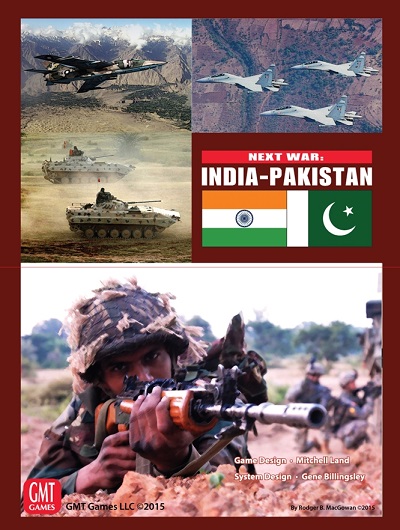 gameplay. What’s more, most of the standard scenarios here can be completed in a single session, and a game that gets played is infinitely better than one that sits on the shelf because you don’t have the time (or table space). The guts here are endlessly compelling, though – all the varied mountain terrain makes for choke points galore.
Next War: Vietnam
Okay, we’re adding in the whole sandbox here, but Vietnam is a dynamic battlefield that can really draw you in. The standard game rules suffice for a great beginner experience, and adds beachheads, more diverse terrain and neat faction variance. Standard game scenarios can still be done in a single sitting too. The next reason to start here, though, is that Vietnam can be integrated with the next two Next Wars on this list for a truly massive experience – think convention or a long weekend at a cabin with your fellow war gamers.
Next War: Taiwan
The island experience! All about the naval landings, paratroopers, and more. Taiwan is just getting its 2nd edition, bringing the original 2014 release up to current rules. While it can integrate well with Vietnam and Korea, Taiwan works well on its own too, but as invading a held island offers significant challenges, I’d save this for when you have a good grasp of the rules.
Next War: Korea
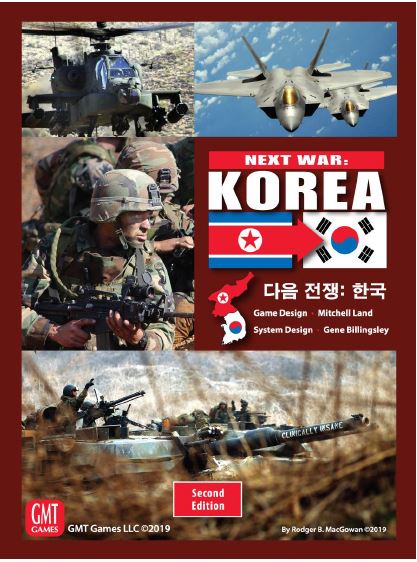 Why so far down? The clumping and the counter density. Korea is a special map that is as rewarding for veteran players as it can be intimidating for newbies. A bigger map, the full suite of strategy and tactical options – Korea is a great next step for Next War players, who can then ‘level up’ again by combining it with one of the earlier titles.
Next War: Poland and Iran
These two – Iran is the most recent, not counting new editions of older titles – offer up vastly different experiences that cover grand scope (Poland) or vast force asymmetry and unique objectives (Iran). Both of these are also standalone, making them easy adds to your Next War collection once you’re fully immersed in how they play.
Overall, starting with India-Pakistan gives you the simplest on-ramp, and the Vietnam-Taiwan-Korea set combines with each other to give you a massive game option pretty unique across all of war gaming. With the advanced rules campaigns, you’re looking at thousands of hours of play time, a truly rewarding system that’s continuing to grow while remaining relevant to the real world.


