
After every quarter of the year, we like to take a quick look back at the new and notable titles (though certainly not the only ones) that sprang out of designer imaginations to our tabletops. 2026’s third quarter updated some excellent games with new expansions and materials, while launching a couple of great highlights for euro gamers and miniatures lovers too.
As ever, when making these lists, I use the time when games become widely available rather than first appearing at a convention. By the same token, new games tend to go in and out of stock frequently as printings and secondhand copies come available, so use that Want List!
Malediction
Bursting onto the scene last year, Malediction’s combination of deck-building wizardry with tactical, on-board play made it a winner. In the months following, it continued to expand from the initial crowdfunded offering, which included STL files for 3D-printing the games’ miniatures to keep cost down and accessibility high. Perhaps understanding that not everyone has access to the plastic-spinning devices, Malediction’s made standee collections available now.
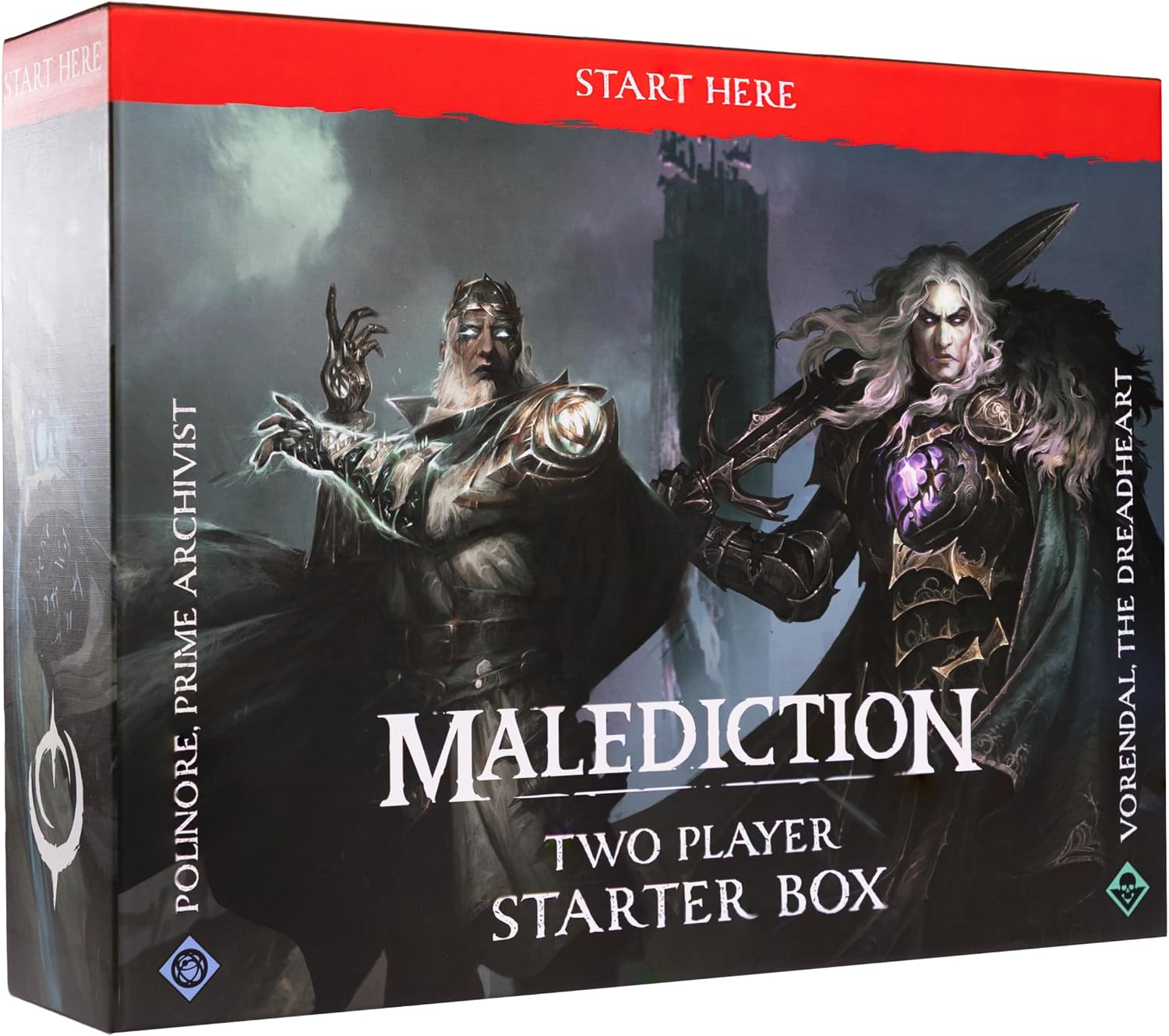 But, more importantly, Malediction has launched a 2nd wave of decks. For a game that was difficult to find after its initial success, you now have numerous entry points. Individual seeker decks, like Countess Morrida Umberland, a wizard with a penchant for the undead, give you a full collection of playing cards, dice, and everything you need to start playing. Grabbing one or two of these for yourself or your pals marks a cheaper, ready-to-play option over the full suite. 2 Player starter boxes are also out, perhaps the most ideal way to jump in as the holidays draw near.
Malediction isn’t a trading card game in the traditional sense – these are no booster backs. More like Legend of the Five Rings or Star Wars: The Card Game, Malediction invites strategy and innovation from a fixed card pool (albeit one depending on which sets you acquire). This makes it ideal for players seeking the thrill of excellent dueling gameplay over pack-cracking or rare card hunting. All told, Malediction is one of the best new entries in the competitive card game genre, and now it’s easier to enjoy than ever before.
Gunsen: The Battle for Toshi Ranbo
I mentioned Legend of the Five Rings up above – its living card game might be out of print, but the world continues to thrive. Its newest adventure is an excellent area control game, Gunsen: The Battle for Toshi Ranbo. At first glance, the bevy of cool stuff here is eye-popping – you have engine building, drafting, a race to fulfill victory objectives, secret missions… it goes on, and you’ll do all this with a medium-weight ruleset and a roughly 2 hour playtime. With up to six people.
Rad.
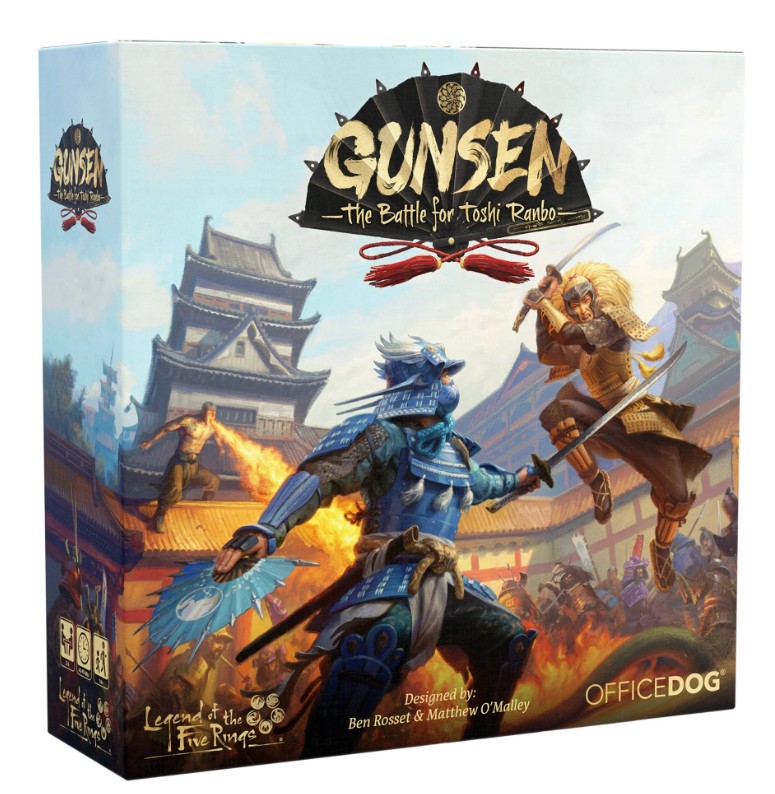 All this conflict is happening around the titular great fortress of Toshi Ranbo, depicted on a lovely hex map you’ll soon cover with landmarks, armies, and heroes (this map changes with every game too). You’ll do this, and engage with most of the mechanics I noted above, through card play. See, every turn has you looking at a series of colored order cards. You’ll pick one, which lets you perform the matching color actions on your player board and gain the bonuses of all previous order cards with that color. It’s a neat tableau system that gives you that engine-building, scaling up feel. Then you’ll bop troops around, build structures, hire heroes and more from your clan’s unique set.
Eventually you’ll run into battle, which is dice-driven, but with plenty of options to control the odds through rerolls, sheer dice volume, and other bonuses. In other words, luck can swing a close contest, but you’ll have a good idea going in as to how it’ll all shake out. It’s not, however, a complicated affair. Gunsen moves.
You’ll complete objectives and win in a fashion similar to Scythe, placing your token on the board and getting a bonus. First one past the 7 goals wins immediately – keeping this one an interactive blast to the end. You’re getting so much game here, a high quality production at a reasonable price (it’s not stuffed with a thousand miniatures), that if your group is a fan of area control battles, Gunsen is an easy win.
Entropy
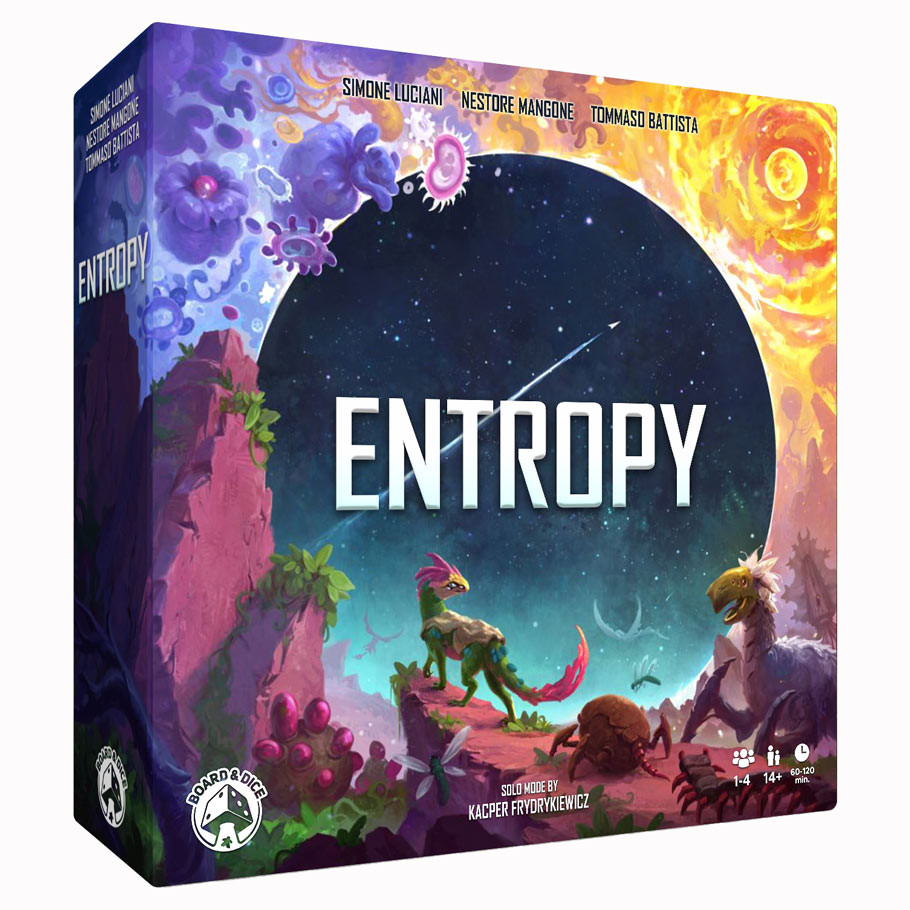 Sometimes, you just need a well-crafted space euro. Entropy, by a powerhouse Italian design trio including Tommaso Battista (Barrage), Simone Luciani (Darwin’s Journey), and Nestore Magone (Shackleton Base), puts you in the shoes of scientists growing their own universes. A race at heart, Entropy concludes when any 2 out of 6 main objectives are completed, though the actual winner is whomever has the most victory points when this happens.
Through a certain lens, you could say all the major deities are playing this game right now. Hmm.
So. Points. You want them, and to get them, you’ll be scooting your scientist several spaces (how far, exactly, is up to you) around a board. You’ll resolve the spot where you stop, creating a new planet or developing a mammal species. But you’ll also get bonuses for moving fewer spaces, and these bonuses or your core action can trigger further stellar events, making Entropy a game that rewards planning. That it’s also not conflict-driven – short of the race, you won’t be blocked in your machinations by other players, this is a series of separate experiments, after all – makes Entropy a golden choice for a group that loves games like Ark Nova or Wingspan.
Entropy shares a playtime with those two titles as well, clocking in at a couple of hours, more so if your group prefers to analyze all the possible permutations of a turn before committing. It’s a puzzle game, and it’s a beautiful one to look at. The board art, chunky components, and bags (upon bags) of various chits and counters nevertheless come together into a readable, colorful whole that stands out on the table.
Europa Universalis: Defying Destiny
A couple years back, Aegir Games partnered with video game publisher Paradox to produce Europa Universalis: The Price of Power, a massive multiplayer… war game? Political game? Mishmash of the two? Anyway – EU landed with a splash, quickly becoming a well-regarded monster where its complexity offered a wide decision space amid the conflict-ridden Europe at the end of the Dark Ages.
Now, with a new printing and a brand new expansion, Europa Universalis is in peak form and more available to enjoy than before. Defying Destiny follows its digital brethren by introducing new scenarios (including a nifty zoom in to the Holy Roman Empire) and, importantly, adding 18 new nations as playable options. There’s other tweaks too, but with a game like this, a big, heavy, interactive beast (that does, for what it’s worth, play pretty well solo with bots too), having a plethora of ways to engage with it is a big bonus.
What I mean here is that depending on who you have at your table, you now have so many unique ways to tailor the game – want a smaller, knife fight scenario for three in central Europe? Have at it. A great powers struggle between France, Britain, Russia, and the Ottomans? It’s yours. Or throw down with six and use random events to change the starting setup so you’re all dealing with a wild new map every time.
Many big games like this have tweaks to vary every game (Twilight Imperium, say, overhauls the entire map every play), but few set in real history give you so much to enjoy. Refined, enhanced and ready to be a mainstay at conventions and group gatherings for a long time to come, Europa Universalis: The Price of Power (especially the Deluxe Edition and its Defying Destiny expansion) is not to be missed.
Starcraft: The Miniatures Game
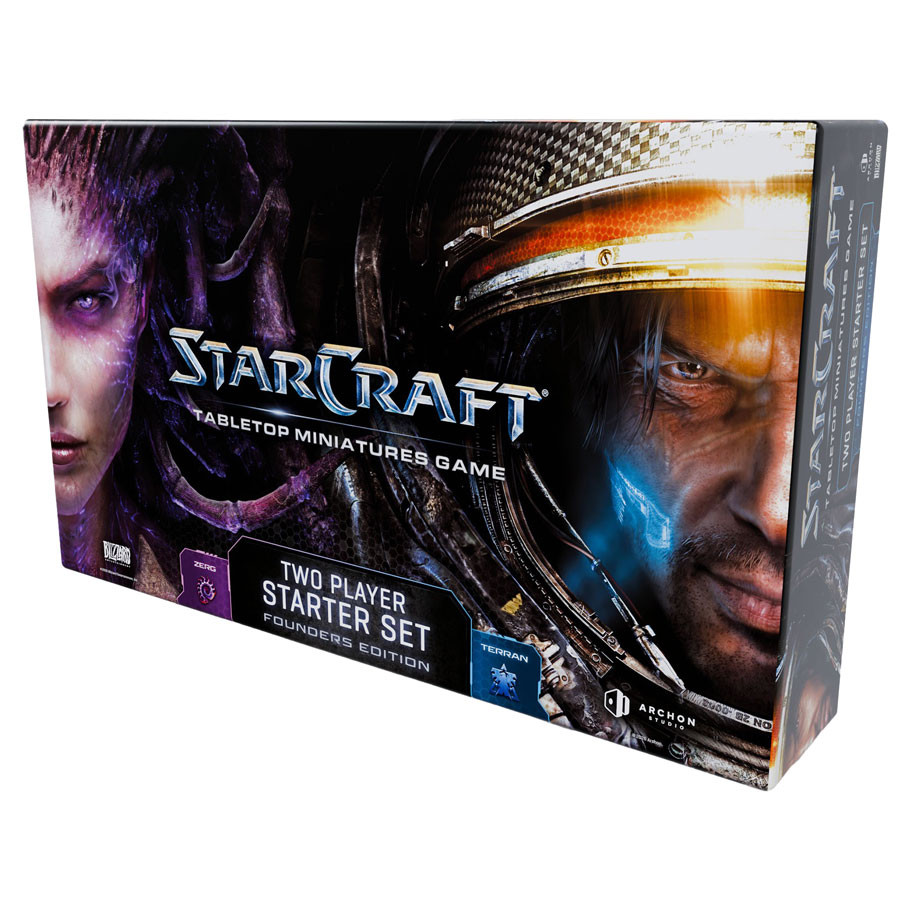 If you pay attention to these articles (and, for my self-esteem, I hope you enjoy them), you’ll have noticed Starcraft: The Miniatures Game mentioned a few times now. It might be me willing it to succeed, but the quality here deserves a look from every miniatures war gamer out there. Now, with a second wave of faction starter bundles and add-ons dropping, letting you vary up your armies (or grab some for holiday gifts to bring your friends into the fray), Starcraft is easier than ever to jump into.
But why should you, with shelves of miniatures (or, perhaps, a wistful look at empty shelves you’d love to fill with miniatures) look to throw Zergs and Protoss into the mix? Because of the supply cap.
This simple tweak, where your forces don’t all magically deploy onto the map at the start, lets every Starcraft match develop over its couple hour play time just like the RTS its based on. Every round, you’ll be able to produce more units and potentially buy or upgrade buildings (cards added to your tableau that give you, well, more units), but the overall army size stays relatively small. This keeps combat fast and furious. The rules are streamlined, modern, and (gasp) free online, though you can get a cheap physical book if you prefer.
If you’ve been hunting for a new miniatures game in 2026, or feel a deep need to construct additional pylons, Starcraft is it.


