
The American War of Independence (or, if you’re local to the US, the Revolutionary War) has provided fertile ground for a whole lot of great war games. You have the father of the modern card-driven game (CDG) in We the People, a modern refresh of the same in Washington’s War, and, as we discussed in our last piece, a stirring mix of battle and politics in the COIN Liberty or Death.
And yet that’s not even close to the full swath of excellent war gaming coming from America’s founding conflict. In the close of our 250th US Anniversary series, we’re taking a look at some of the other excellent games of this era.
So grab your musket, your blue or red coat, a flagon of spruce beer, and let’s go.
GMT’s American Revolution Series
GMT’s American Revolution series has been around for a little bit now, starting in the early 2000s, but GMT continues to show it much love with new Tri-Packs, offering updated printings to make engaging with this lighter hex-and-counter series easier than ever before. Mounted maps, replacement counters, player aids,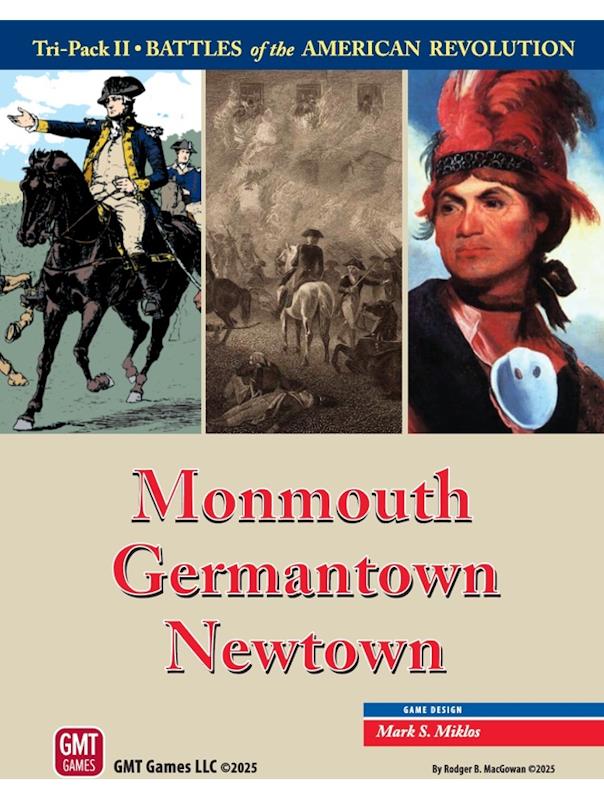 new solitaire options, and more goodies (not to mention a deeper box to hold it all) make for a great refresh for series veterans or newbies alike.
I’ll hold, though, that the American Revolution series really hits its mark as a wonderful introduction to hex-and-counter war games that gets away from World War 2. These are tactical scale battles played out on tight maps (as befitting the size of so many town-level engagements in the war), meaning you’ll be in the thick of it from the word ‘go’. The era means you’ll have artillery, cavalry, and infantry, but no air power or heavy vehicles to deal with, further simplifying the rules load (the series rulebook here is less than 20 pages, including player aids and such).
Once you have your units on the exceptionally clear map boards, gameplay springs forth with a series of I-Go-You-Go turns, with artillery serving as a defensive fire opportunity for the opposing player on any given turn. Initiative comes via a turn-by-turn dice roll, with your value boosted by overall force morale and, in a neat twist, momentum chits earned by rollicking performance in combat. While the luck here might make some folks frown, the feeling of your army catching the wind and charging forward after spectacular success is a thrilling one. Less so if you’re on the receiving end, but with a good counter, you might be returning the favor awfully quick.
A simple CRT gets its own flavor with tactics cards, boosts that aren’t arbitrary but rely on you to position your leaders or flanking units effectively. Giving your roll a 1 or 2 value bump is a nice sweetener to effective play, but the cards alone won’t save you from bad odds. Still, BOAR, as it’s known, follows its time period by making most battles end in disruption and forced retreat rather than bloody slaughter. That ties the game back around to the morale track, as victories and losses often come by breaking the enemy rather than wiping them off the map or claiming all the objectives.
True to life, there.
Getting started in the BOAR series is easy with those tri-packs – most of the included battles can be played in a few hours. Some of the larger games, like The Battle of White Plains, offer up larger conflicts that’ll eat half a day, but if you grow into those games, they’re a wonderful culmination of your earlier steps. All told, this series is an excellent hex-and-counter exploration of the war, chock full of flavor without reams of rules, and made with care. Get after it.
Black Powder Epic Battles – Revolution
Goes without saying that you can’t have a war without soldiers, and as fun as hexes and counters are, nothing brings a battlefield to life better than literal figures. Black Powder, the venerable miniatures war game capturing the era of muskets and cavalry charges, will transport your tabletop back a few centuries until you can smell the grass and gunpowder. The relatively new Epic Battles variant ups the number of units on the field, making things appropriately grand, while revising the rules to accommodate.
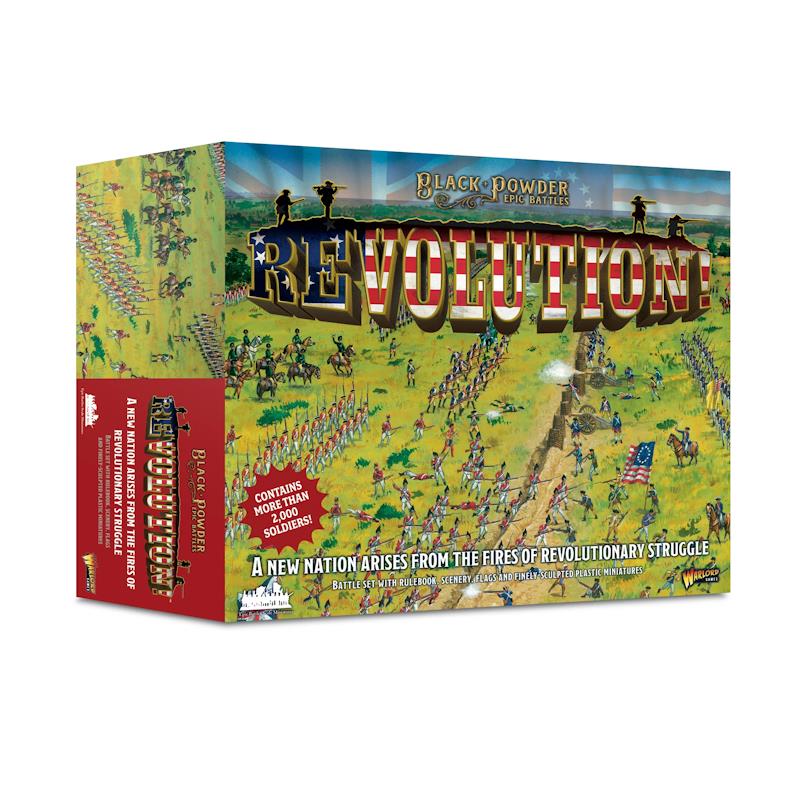 Take the Revolution set, which comes with a frankly absurd number of figures set in rank-and-file formations, including almost every famed commander in the war you could want (George is there, folks.). One box and you can wage battles with more than a hundred models, cannon and cavalry among them. Monmouth, Yorktown, and more are there for the playing, with boxes for additional brigades available should you want to actually field the real troop counts (kidding, sort of).
Black Powder’s gameplay runs on a simpler I-Go-You-Go system, with opposing opportunities to counter coming in hand-to-hand combat. You’ll measure, move, roll some dice, and cackle madly as your cannons soften up those pesky rebels for a red coat barrage. Wipe the enemy or take objectives to score the victory. Like any miniatures game, too, you can adjust the battlefield to suit your literal playing space, putting Washington’s charge on your dining room table or the pub’s corner booth.
Really, Black Powder’s low entry cost and perfect historical position give it great utility as a second game for miniature lovers, one easy to bring out when you want to swap the Space Marines for something a little more grounded. For core war gamers, you’ll find your counters coming to life here, and potentially a break-in to a totally new side of the hobby you never knew you’d enjoy.
Command and Colors – Tricorn
We’ve talked Commands and Colors before – Napoleonics, Medieval, and even Samurai Battles all bring their own flavor to the core cards-and-dice gameplay. Tricorn is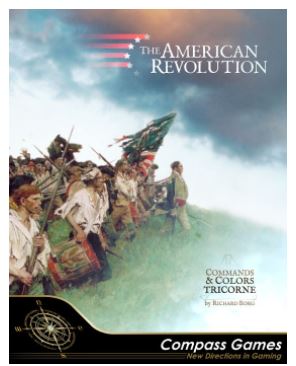 Compass Games’ American Revolution version (designed, like so many classics in this series, by Richard Borg) and its relative modernity means it carries most of C&C’s great ideas forward while bringing in new ones. As before, you’ll still start every turn by playing a card from hand, using its effects for special effects or activating units. Dice are chucked in copious amounts, but you’ll quickly find tactics trumps mindless aggression.
Tricorn adds to the usual tactic roster through rallying and leader effects, reflecting the outsized effect such legendary commanders like Washington, Howe, and Lafayette had on the forces in the field. As a result, you’ll actually see fewer outright casualties in Tricorn, as your objectives can be achieved by driving forces from the map rather than eliminating them outright. Leaders present tantalizing targets too, worth medals with their defeat and adding dynamism to the engagement as, effectively, mobile objectives.
All this plays out on chunky hexes with terrain represented with literal raised hexagons, trees, and so on. It’s a bit of chrome that, combined with the big, readable blocks—fog of war is an essential element of the series—makes Tricorn an easy choice for newer war gamers. That most battles play in an hour or two, and there are twelve in the base, and more with expansions, make Tricorn a war game for any afternoon or evening. Set up a round or two after grilling out on your deck and you’ll have a quintessential American experience.
Black Seas
We take to the waves to conclude this piece with Warlord Games’ Black Seas. Playing counterpart to fellow Napoleon-era naval skirmisher Sails of Glory, Black Seas offers a compelling set of changes that set it apart, and give you a choice in how you prefer your Age of Sail games.
First and foremost, Black Seas comes from a hobby publisher, and you’ll find its models don’t come pre-painted and pre-assembled as with Sails of Glory. That fact alone, depending on whether you’re a builder and painter or somehow who eschews both, might make your choice. If you are a hobbyist though, you’ll find building these ships unlike almost any other miniature game assembly out there. Rigging, folks!
Once you take your fleet to the watery table, you’ll find Black Seas angles for smooth play that still evokes the sailing era. Your French ships-of-the-line will take time to adjust their sails, risking speeding off the table. Broadsides in all directions impart penalties, reflecting crew limits that made shooting every cannon on board difficult. Yet, you won’t find many Sails of Glory smaller rules, the bits that add grit to the game in simulation’s name. Not to say Black Seas plays loose with history, but both carry that weight in different places. For Sails, the end result is smaller engagements with more precise play per ship. Black Seas can get whole armadas engaged without overwhelming players.
The best way to jump in here is with the Master and Commander starter set, which gets you nine ships, an island battle map, and all the accouterments you need to have the French sail to the rescue of the Americans. Yes, I’m aware that’s not the plot of Patrick O’Brian’s novel of the same name, but hey, we can’t all be perfect. From there, you can pick up faction sets, including a nifty one of the nascent US Navy.
For the best experience, put on a playlist of sea shanties when you get this one to the table. Grog goes to the winner!


