
Publisher Spotlight: VUCA Simulations
It’s a familiar question among longtime wargamers, one that has likely been asked many times over a well-worn hex map and piles of cards and counters: What if we designed our own game, one that kept the best ideas from the past, but executed them better?
For Patrick Gebhardt and his co-founder Julius Bruncken, two friends and longtime wargamers, that question became something more than a late-night conversation. It eventually became the starting point for a publishing venture they named VUCA Simulations.
We spoke with Patrick about VUCA’s philosophy, the kinds of games they design, and how the company approaches the challenges of historical simulation.
A New Kind of Publisher
Wargame design has never stood still, and VUCA Simulations sees its work as part of that ongoing evolution.
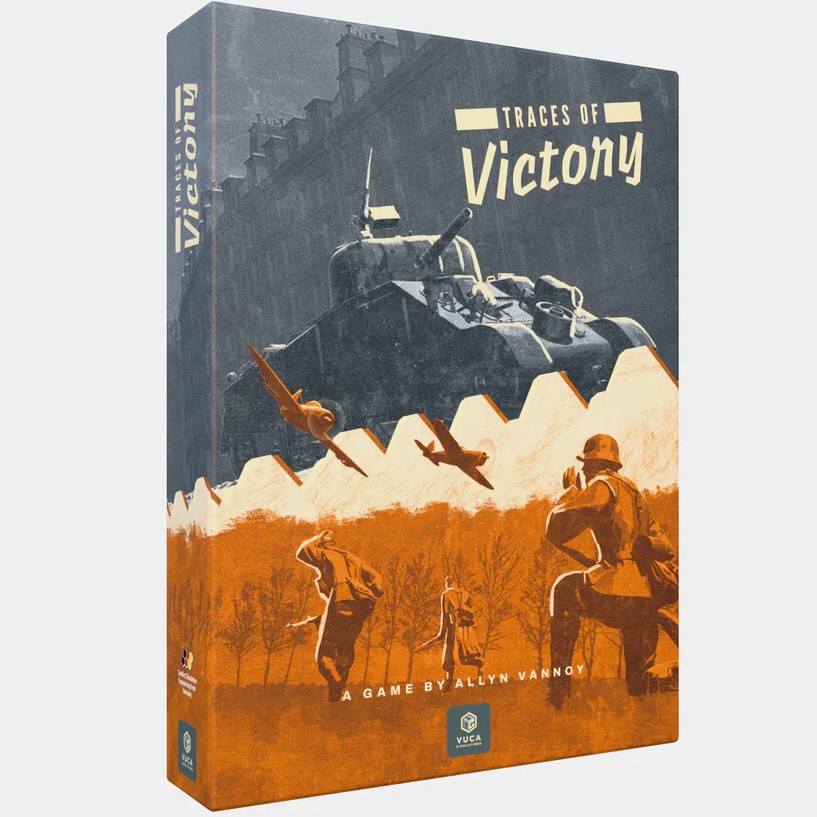 “While we are deeply committed to historical and thematic authenticity,” Patrick explains, “we place equally high emphasis on presentation, usability, and production quality.”
In practice, that philosophy shows up in everything from the visual design of the game to the physical components players interact with at the table. Patrick describes component quality as one of the pillars of VUCA’s identity.
“We invest heavily in durable materials like plastic playing cards and high-contrast, easy-to-read components,” he says. “For us, production quality directly impacts the overall player experience and perceived value of the game.”
That same attention to detail extends beyond the physical materials themselves. VUCA Simulations places a strong emphasis on artwork and graphic design, treating them as core elements of the system rather than decorative additions. Visual design helps players navigate the mechanics while reinforcing the historical setting of each game. Patrick notes that one of the company’s primary goals is to make games as user-friendly as possible.
“That means intuitive layouts, logically structured rules, strong player aids, and onboarding tools that help players get into the game quickly – even when the underlying systems are deep and complex. We want players to focus on decision-making, not on fighting the interface of the game.”
That philosophy is even reflected in the company’s name. VUCA is an acronym drawn from military planning theory. It refers to volatility, uncertainty, complexity, and ambiguity.
“VUCA isn’t just a name. It reflects how we frame conflict experience.”
In practice, that means designing games where players must make decisions with incomplete information, deal with unpredictable consequences, and react to opponents whose plans may shift at any moment. The goal, Patrick says, is to capture the tension of leadership under uncertainty rather than simply resolving predetermined outcomes.
Interaction and Engagement
VUCA’s games cover a wide range of historical topics, from Napoleon’s 1812 march into Russia to the German attempt to break free at Stalingrad in 1942. When it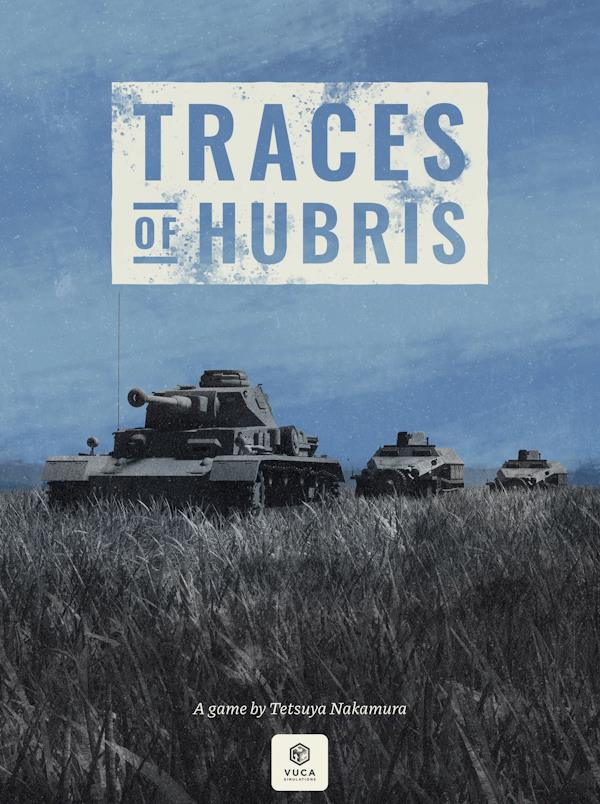 comes to the mechanics behind these and other titles, however, the company avoids imposing a rigid, one-size-fits-all design philosophy. Instead, VUCA places a great deal of trust in the designers leading each project.
“Each project is led by its designer, and we believe it is their creative responsibility to decide what should be abstracted and what should remain visible within the system,” Patrick says. “There are no universal rules or mandatory guidelines from our side. Different subjects demand different treatments, and each designer brings their own philosophy, priorities, and interpretation of the historical material.”
In that environment, the publisher’s role becomes one of refinement and support. Patrick explains that VUCA works closely with designers to challenge assumptions, strengthen the system, and ensure that each game delivers a coherent player experience.
“In practice, this means that some games may emphasize granular detail, while others opt for broader abstraction,” he says. “What matters to us is not the level of detail itself, but whether the chosen approach creates meaningful decisions and a coherent simulation of the topic being explored.”
One way that philosophy appears at the table is in how VUCA structures player interaction. Rather than relying on a strict “I go, you go” turn structure common in many classic wargames, the company often experiments with alternative approaches.
“We use alternative sequencing systems like alternating actions, initiative-based play, chit-draw or simultaneous planning,” Patrick explains. “This keeps all players engaged, reduces downtime, and creates constant tension throughout the game.”
Learning the Rules
One common theme running through VUCA’s philosophy is player accessibility. Patrick says one of the first lessons the company learned was the importance of writing rules that are clear and approachable for players of all experience levels. VUCA describes its rulebooks and player aids as being didactically optimized, which Patrick explains in simpler terms.
“It means designing every part of the rulebook and support materials to make the game easier to learn, to teach the player, not just inform them,” he says.
To achieve that goal, VUCA incorporates several deliberate approaches. Rules are presented in a structured, step-by-step format and supported with examples that show how they play out during actual play. Scenarios often begin with simpler situations before gradually expanding in complexity, allowing players to learn the system organically as they go. Well-designed player aids also reduce the need for constant rulebook lookups, helping players stay focused on the decisions unfolding on the table.
An International Focus
Clear rules and quality components are only part of the development process. VUCA’s games are also shaped by a network of designers, artists, and consultants from across Europe and beyond. Patrick says this collaboration brings a distinctly international perspective that strengthens both the mechanics of each game and the historical subjects they explore.
“Contributors from different regions bring varied viewpoints on conflict subjects and mechanics, which forces the design to be more robust and culturally informed,” he explains. “Also, the constant communication in international teams as well as travelling to conventions all across the globe enriches our personal development.”
Another important influence on VUCA’s work comes from the players themselves. The company was founded by wargamers, and Patrick says maintaining an ongoing relationship with the community is an important part of the publisher’s philosophy.
“We see our relationship with players as long-term, not transactional,” Patrick explains. “For us, publishing does not end at release – it continues throughout the lifecycle of the game.”
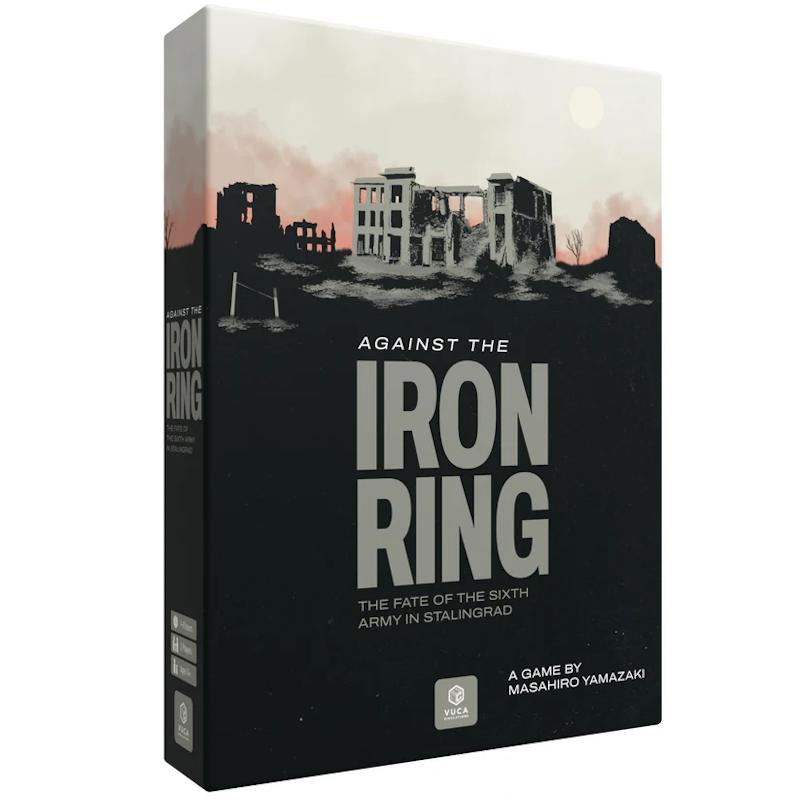 Taken together, these priorities help shape the kinds of games VUCA chooses to publish.
“This philosophy naturally leads us to focus on games that offer meaningful strategic decisions and historical depth, while remaining accessible, well-produced, and fully supported long after purchase.”
Like many publishers before them, VUCA Simulations grew from the conversations that happen naturally among passionate players: how could these games be improved? Today, the company continues to pursue its answer to that question through carefully designed systems, strong production values, and a philosophy that places players at the center of the experience.
For Patrick and the rest of the team, the goal is not simply to simulate history, but to create games that capture the uncertainty, tension, and decision-making that define it.
You can read the rest of our conversation with Patrick Gebhardt below.
A Few Questions with VUCA Simulations
How did VUCA Simulations first come together, and who is involved in the company today?
VUCA Simulations emerged from my personal passion for wargames with a simple but clear goal: to design strategic, operational and tactical war and conflict simulations that blended historical grounding with accessible, interactive systems. The impetus came from long-standing discussions among friends and players about what existing games did well — and where we thought they fell short.
I founded the company with a close colleague, and as the scope of our work expanded, we built a loose but highly collaborative network of designers, artists, historical consultants, and playtesters from across Europe and beyond. Today, our team structure is project-centric: for each game we select contributors whose skills best align with that project’s subject and design challenges, while I remain responsible for overall vision, design coordination, and production oversight. But the VUCA core team is me (Patrick), my co-founder Julius, our customer service rep Verena and our graphic artist Pablo. But we really also depend on great help from amazing developers like Edgar and Lennart.
What does a typical development cycle look like for one of your games, from initial concept through release?
It is hard to describe a typical dev cycle for VUCA, as each project is unique and handled differently. It really depends on the team, the experience of the designer, the state of playtesting etc.
Your stated aspirations include the highest component quality as well as top-notch artwork. What goes into that commitment, and how do you balance production quality with design constraints?
Simply put, we do not impose design constraints on our designers. We let them develop what they believe is best for their game first, without thinking about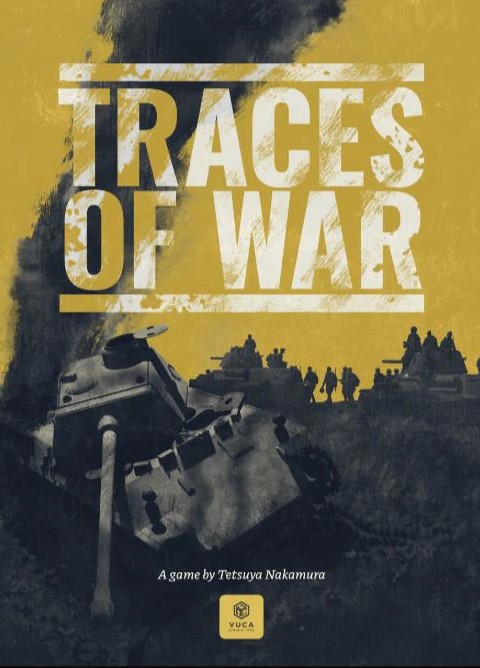 production limitations. Once the design vision is clear, we work together to explore how we can elevate it further through component quality, artwork, and material choices.
Only after that do we look at feasibility and optimization – finding ways to preserve the original vision while making it producible. This ensures that production never dictates design; it supports it.
Who do you see as your core audience, and have you been surprised by how different groups of players respond to your games?
Our core audience includes experienced strategy and simulation players, but we’ve also seen interest from non-traditional groups seeking deep, interactive historical games. Many players appreciate our emphasis on structured learning, even if they lack extensive wargame background.
As you look to the future, what do you see as the most important priorities for VUCA Simulations as it continues to develop?
Our main priorities are to continue expanding our portfolio of high-quality simulation games while staying true to our core values: strong design, premium production, and excellent player support. We want to deepen our modern conflict and historical lines, work with new international designers, and keep pushing usability standards in the genre.
Another key focus is strengthening our community and aftersales support – through direct communication, rules updates, replacement services, and long-term engagement with players.
At the same time, we aim to grow our international distribution and visibility, ensuring our games reach a broader audience without compromising on quality or design integrity.
Just for Fun
Is there a historical period or subject you’d personally like to explore as a game?
To be honest, I think there is something in every historical period and subject. You can hand me a game or book about the Middle Ages, about WWI or WWII or about any modern conflict and I will be eager to play or read it. It would be a shame to limit myself to a given topic.
Is there an upcoming or recent project you’re especially proud of, or that you feel best represents what VUCA Simulations is trying to do?
I am proud of all of the projects. We have such fantastic game designers to work with, it would not be fair to mention someone specific here.
Outside of your own projects, what kinds of games do you personally enjoy playing these days?
Whenever I find the time, I still love playing wargames from other publishers regularly. But about three or four times a year, we do a whole day of board gaming with my friends from back in school. Then we play games like Twilight Imperium, Space Empires, Eclipse… And I just taught my daughter chess last week 😉
Patrick, thank you so much for your time!


