
Every nation has its holidays, and the US is no exception. Recently, President’s Day, a generic holiday originally set around George Washington’s birthday, came and went. There is no bigger monument to America’s presidents than the literal mountain, Mt. Rushmore, which sports four faces chiseled into its rocky cliffs. As it happens, and perhaps as no surprise to you, each of those four presidents have games that readily explain the (martial) world during their lives. So, in the perfect thematic partner to President’s Day and Mt. Rushmore, we humbly present eight games, two per president, ready to immerse you in their worlds.
George Washington War Games
George Washington lived a seismic existence, jumping onto the stage, arguably, in The French and Indian War. Wilderness War throws you and another player into 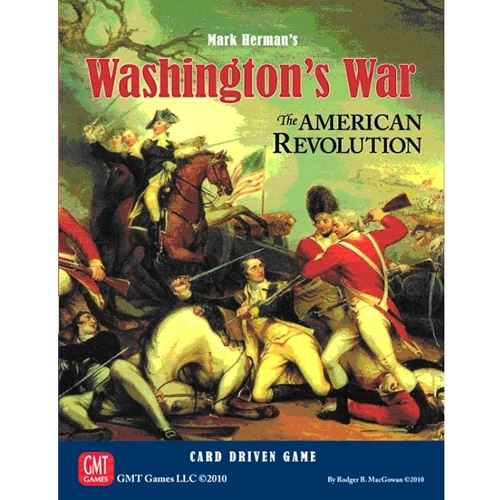 a card-driven (CDG) battle between Britain and France in one of Volko Ruhnke’s (COIN, Levy and Campaign) first designs. CDG veterans will be able to jump in without much effort, burning action points to move troops about the map, playing cards as events for one-time effects, and so on, so good. What makes Wilderness War still resonate, however, is the commitment to theme and history: both sides can recruit and leverage Native American forces to harass and sabotage, and the devastating effects of Winter on poorly equipped regiments make for a tense scramble to wage your campaigns and get out before freezing to death. While our next game is better for war game novices, Wilderness War nevertheless is a compelling, tense dual that can be finished in a single evening, which is why you’ll find it readily available more than twenty years after its first printing.
Washington’s War still has a few years to go before hitting the two-decade mark, but this rendition of the Revolutionary War, a remaking of the original CDG We the People, fires from the get-go. Snappy, dice-driven combat with simple counters and a sub two-hour play time make Washington’s an ideal candidate for first-time war gamers. You don’t need to overwhelm someone with a giant CRT, counters with inscrutable numbers, and a plethora of exceptions. Its forts, the French alliance, and ops points. Of course, once you start playing, the depth begins to grab you, from buying a needed event from your opponent’s discard to surrounding spaces for free captures like Othello, Washington’s War has plenty to explore, whether it’s your first war game or your fortieth.
Thomas Jefferson War Games
Thomas Jefferson straddles two eras: America claiming its independence and the early 19th century, as the fledgling nation picked fights and tried to figure out what it was. For the first, find another player (or several, or solo it) and dig into Liberty or Death, a COIN built around the Revolutionary War. More complex and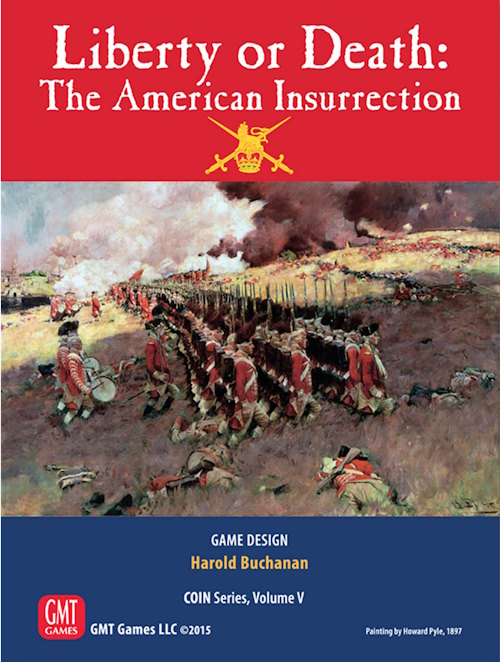 wide-ranging than Washington’s War, as befits Jefferson’s international role during the conflict, Liberty or Death has French and Indian factions too, each with their own objectives and reasons to meddle. Best approached with a veteran group, Liberty or Death is both deep and sprawling, able to draw your group into this era for hours of strategic adventure. Also, as its principle players are the Patriots and the British, this is a great COIN to try as a 1v1 duel, with bots for the other two factions.
Ditching the Revolution, we move fully into Jefferson’s presidency with Shores of Tripoli, a CDG about the First Barbary War, in which a small American force found themselves embroiled in an unexpected conflict. Shores thrives as a lighter war game, working as a great introduction to the format. A mounted map, chunky components, dice rolls aplenty, and room for tactical dancing along the African coast, Shores has much to recommend. Then you realize it plays in an hour, and now you have the sweet spot for a war game of this weight – an easy week night duel with your favorite partner, kid, or hapless neighbor. Oh, and it shines a light on a little-explored conflict, so you get a nifty educational bonus too. Jefferson would be proud.
Theodore Roosevelt War Games (Sort of)
While the other games on this list are primarily war games, it’d be a miss not to give Teddy Roosevelt, a president with a passion for conservation, a pair of games 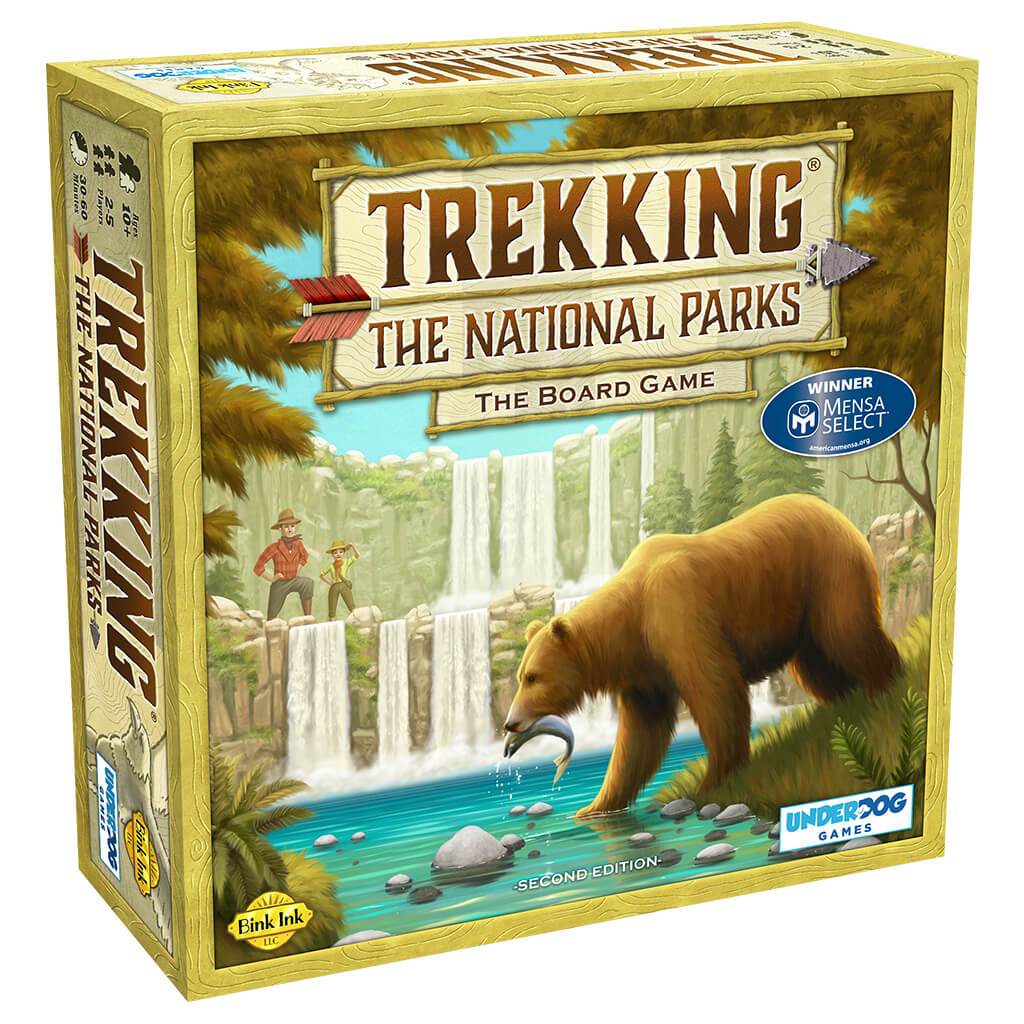 focused on the same ideal. Parks and Trekking the National Parks are two relatively light games about exploring each of the 63 national parks, collecting points as you go. Trekking takes a lighter view, and is a great play with kids, using a Ticket to Ride-style map letting you venture across America to the parks, scoring as you go along. Parks is slightly heavier, more concerned with the logistics of exploring the parks themselves. You’ll use gear, go hiking and swimming, camp, and more as you dig into the wilderness. Whomever has the best time scores the most points, but that’s frankly secondary to appreciating the gorgeous artwork, particularly with the second edition.
Roosevelt’s life, though, wasn’t all nature. He did form the Rough Riders, riding off to join The Spanish-American war. That conflict gets star treatment in… The Spanish-American War 1898, by Compass Games. Obvious title aside, 1898 offers a compelling mix of naval and land-based hex-and-counter conflict with a rules-light system emphasizing playability. A remake and revision of the classic Remember the Maine!, this production emphasizes big, mounted maps, clear play, and a whole slew of neat historical details. Like yellow fever! Seriously though – I’m always a fan of clever approaches to lesser-known conflicts, and The Spanish-American War 1898 does everything you’d want without burdening players with a heavy rulebook.
Abraham Lincoln War Games
Lincoln marks the last of our Rushmore presidents. At the outset, there’s about a billion games you could choose from here. Grand civil war titles abound, from classic hex-and-counter, to Blind Swords, to GMT’s Great Battles of the American Civil War, to Blue Panther’s The Pursuit of John Wilkes Booth from last year. Yet, for me, the game that gives you Lincoln’s world in full is For the People. Mark Herman’s classic CDG literally has one player as Lincoln, not only steering the Civil War, but passing the Emancipation Proclamation, handling diplomacy, and more. Doing each of those actions comes with opportunity costs (in the game, choosing to do one action means leaving others on the table), which, within cardboard constraints, does more to put you into the situation of a commander in chief than just about any other. This is the quintessential Lincoln experience.
And yet. Lincoln also had to deal with the realities of war. Battlefields and the logistics of building an army. Black Powder, a historical miniatures game, literally lets you build that army. With point limits, you’re having to choose what to field for a given battle, judging your own forces against the enemy’s likely deployment. As a miniatures system, Black Powder is far from the most complex, but there’s just enough gilding on this ruleset to bring you into the crackling fire, cavalry charges, and cannonades inherent in this era. If For the People is the high-level Civil War experience, Black Powder is the bloody, brutal, engrossing core.
If your favorite president isn’t on Mt. Rushmore, your options are more limited (sorry, Millard Fillmore fans). JFK and Nixon arguably get the most spotlight, with 2-player duels 13 Days: The Cuban Missile Crisis, 1960: The Making of the President, and Watergate (and, I suppose, virtually every Vietnam war game in existence).
Should you really want to immerse yourself in the vast sandbox of the modern American presidency, however, no game gives that feel better than Mr. President: The American Presidency, 2001-2020. This solo monster, with a second edition imminent (and an upgrade pack for owners of the original) is at once addictive and educational, forcing you to deploy limited resources to handle crises while also advancing your political agendas. Designed to sit on your table for a play time that could run more then 10 hours, Mr. President is nevertheless engrossing, building narratives as your operatives struggle and succeed, your choices beget consequences both catastrophic and celebratory. Dice rolls abound, but the randomness is mitigated by the bonuses gained in who you send and what prior policies you’ve decided. By the game’s end, you have a personal take on recent events. Would your efforts get you carved onto the mountain, or tossed in the dustbin of history?


