
If you walked into a room and saw, splayed out on the table, a sprawl of hexagonal tiles, plastic spaceship models, and fistfuls of tokens, there’d be a dozen excellent games that could come to mind. Today, we’re taking a look at one of the newest entries, because it’s rad.
Based on the video game (EVE), a sprawling multiplayer opus where players control nearly everything, EVE: War for New Eden is one of the newest entries into the space 4X genre, and it’s arrived with guns literally blazing.
Seriously – with a genre this crowded, EVE sets out to make its difference in combat, so let’s get to blasting.
What is EVE: War for New Eden
Sure, with the base box of EVE, you get what you’re looking for: a huge set of tiles, spaceships, tech cards, and opportunities for up to 4 players to carve up the galaxy. You’ll pick your faction, done here with less starting asymmetry than fellows like Twilight Imperium, only to rapidly diversify thanks to a huge tech library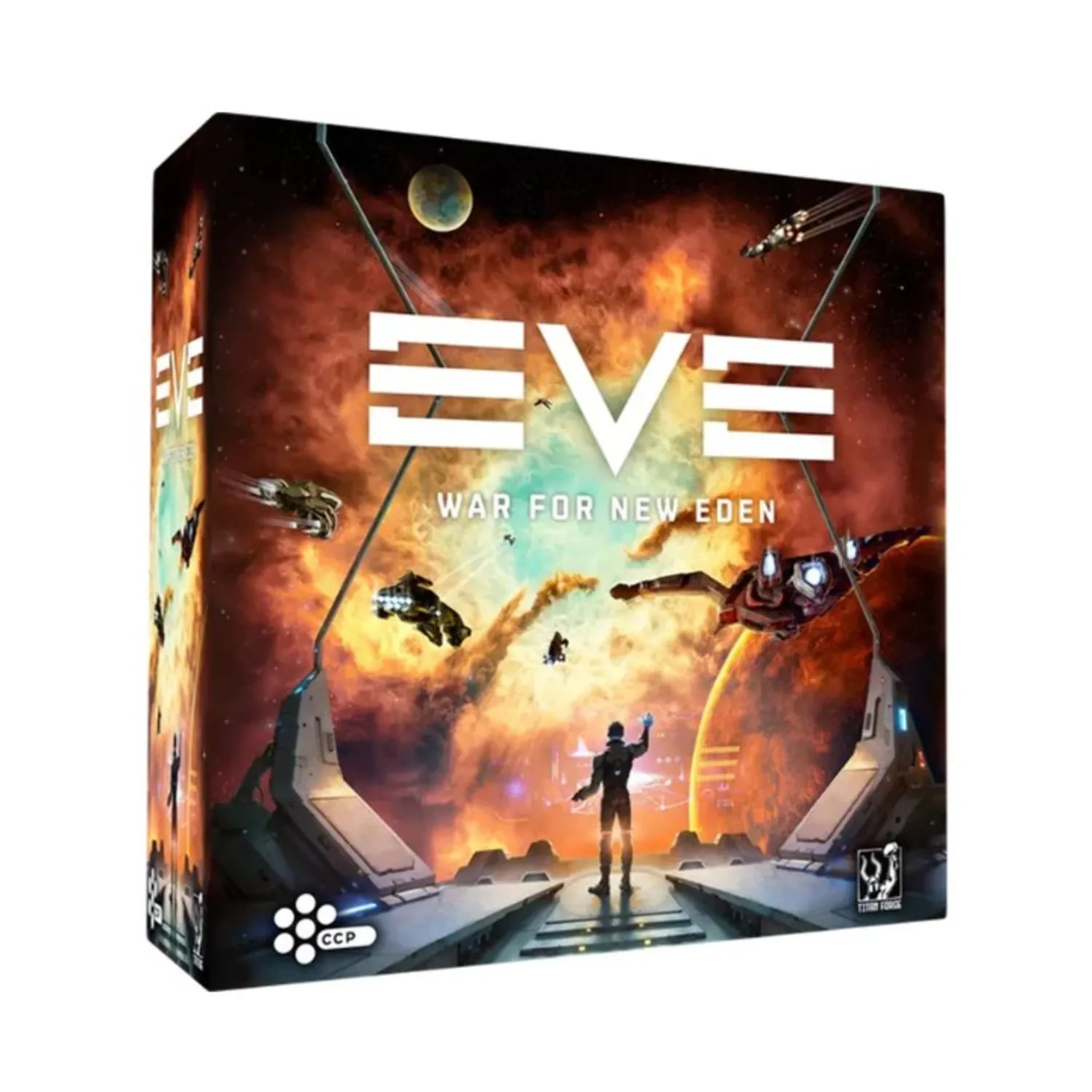 that can be researched in almost any way you like. While combat is EVE’s biggest difference-maker, these techs and how they let you grow your faction into its own unique beast is a fascinating second fiddle.
You’ll use those techs to foster exploration, grabbing more territory, and sculpting your personal fleet of laser-spewing dreadnoughts. As you expand, you’ll adapt your strategy to your opponents, and EVE gives you the options to do so. In a too-rare twist, EVE lets you win with clever economic play, with factories capable of earning victory points. In other words, you’re actually growing an empire here, not picking from a menu of killing techs and seeing whose dice come out better.
Sprawling across the interstellar board comes through actions. Every player gets three per round–and EVE’s endgame is player-driven, so there’s no arbitrary last round–with the tantalizing option to purchase more actions with cash. This is your empire spending its limited efforts on something important, though caps on actions (e.g. you can’t manufacture more than once) keep runaway engines in check. In other words, when you notice an opponent has something good going, you’ll have time to stop him.
While exploration and other elements are randomized, and lucky draws can impact how many resources you have, EVE limits pure chaos. The balance, here, often shifts to the players to enforce, a design choice that fosters interactivity. Turtling and racking up points won’t be possible if the other players do their job, and someone who conquers a valuable planet should find targets on their backs.
Extracting that value brings another layer to EVE’s economy – you’ll need to mine and refine, and potentially trade those resources with your would-be opponents. Developing your economy and protecting it isn’t easy, but the effort req
When you inevitably fly your ships into an opponent’s territory, that’s where the combat (yes, after all that teasing, we’re here!) kicks off. Most games of this ilk have you lining up your ships like Napoleonic infantry and blasting one another with dice until someone’s fleet is cinders. EVE posits something deeper.
See, EVE’s combat tends to play out with fleets. Not a few ships on either side, but stacks of up to 10. Small, medium, and large ships all operate differently in 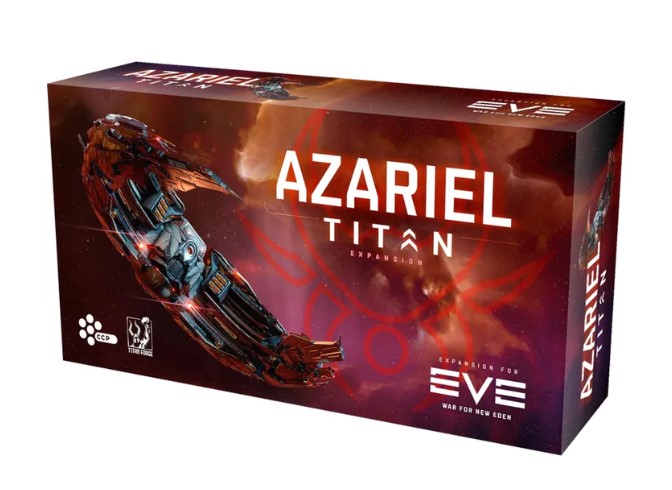 combat, with separate defensive factors for targeting and armor that must be overcome before damage can really be dealt. In this way, starfighters and bulky capital ships have their unique purposes—the big guys have a hard time blasting the little ones, and vice versa-and a smart fleet will have a varied makeup.
So many ships in a battle might make things unwieldy, but EVE splits its fights into three ‘orbits’, where you’ll designate a leading ship and supporting vessels. You’ll roll with the leader’s stats, and buff it with supporting ship abilities, making the composition of each orbit a tactical decision. Dice get thrown, damage gets dealt, and because we’re dealing with fleets here, you’ll get casualties. No unsatisfying combats where one side leaves entirely unscathed.
The combat wrinkles give EVE a more war game focus than many of its contemporaries, with battle victories often the result of careful fleet composition and tech choices rather than lucky die rolls. It’s the beating heart of this 4X, and what makes EVE the standout choice if you’re looking for a 4X with great fights.
EVE: War for New Eden Expansions
At first glance, the EVE expansions are both numerous and a bit confusing, but I’m going to group them here so you can tell which ones are worth getting (none are essential – the core box is plenty of game).
Want five players? Then the HAVOC expansion, which adds a 5th player pirate faction, is essential. I’d mark this as the top expansion to get, because a new faction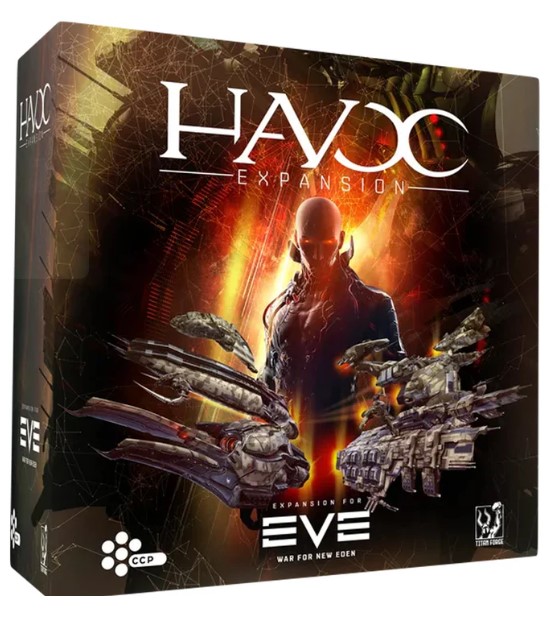 adds the greatest amount of bang for your buck. Also, pirates are cool.
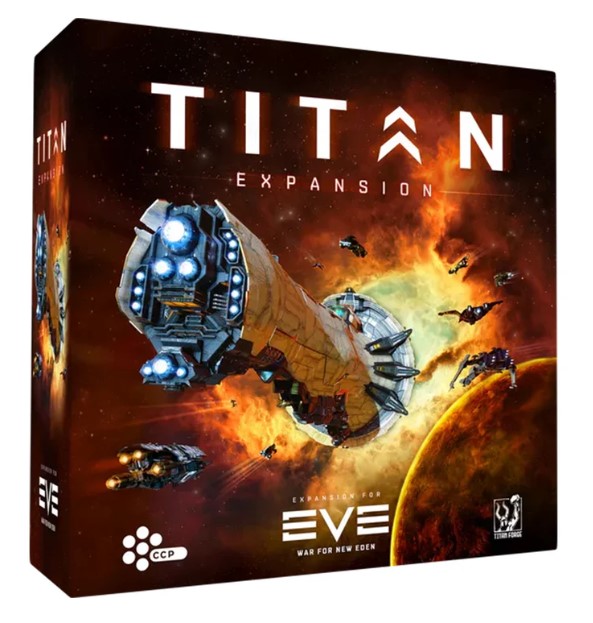
From there, consider the TITAN expansion (and the Azariel expansion for the pirate faction), as that adds immense capital ships to the game for every faction, and who doesn’t love gigantic monstrosities flying about the cosmos?
Lastly, the Succession expansion is one to consider after you’ve played a few games and want to add more variety. You’ll get a bunch of new leaders and faction development cards, boosting asymmetry while giving you more ways to develop your faction. It’s one of those delightful expansions that makes a game fresh without adding tons of new rules.
The rest of EVE’s expansions are cosmetics, upgrading tokens, ship models, and more to help EVE, already a pretty game, pop on the table. I’d always put aesthetic expansions like these at the bottom of the list, but if you’ll be playing EVE a lot, the added tactile joy is nothing to sneeze at.
How EVE compares to Other Sci-fi 4X Games
I hear you, though. Space 4X is a crowded genre, with games all over the spectrum. Where does EVE land among its contemporaries?
Twilight Imperium: Less than half the length and almost half the players. EVE doesn’t have the political intrigue, but it’s much easier to get to the table. These two can co-exist without a problem.
Eclipse: More faction asymmetry and euro mechanics make Eclipse a perennial standout. These two are close. EVE’s going to be a bit shorter and easier to learn, but the real difference here is the combat. If you’re a conflict-heavy player, go EVE. More deliberate and economic? Eclipse.
Andromeda’s Edge/Voidfall: The euros of the bunch, Andromeda’s Edge is the most divergent here, and probably the easiest to pop up and play. I’d use AE to bring your euro-focused gaming group to space, and then introduce EVE when they’re ready to play a more pure 4X. Voidfall is substantially heavier and longer, with cooperative options, and so I’d toss a coin on whether you want intense combat (EVE) or an emphasis on empire building (Voidfall).
Space Empires 4X: The most pure war game of the bunch, Space Empires is excellent, but requires accepting war gaming conventions (counters, pen-and-paper notation, a more spartan aesthetic). If your group are hardened GMT vets, start here. If they’re coming from Risk or Kemet, go with EVE.
Fractal/Last Light: These speedier 4X games pack a lot of punch into a shorter playtime and, again, co-exist just fine with EVE or the other games in this list, simply because you can reach for either of these any night of the week.
 The differences in these games are significant, enough that you could justify owning several (or, at least, playing most before settling on one to keep in your collection). Or you could make the call in the most thematic, enjoyable way possible – have each person in your group pick one, play them all, and declare a victor.
As they say in New Eden, friendship is the best ship.


