
Continuing our series on games to celebrate the United States’ 250th birthday, today we’re looking at the diabolical realm of politics, both national, local, and criminal. While every nation has their own legal dramas, the US has provided ample fodder for cardboard classics new and old. In the last few years we’ve seen Fort Circle Games cover the Suffrage movement in Votes for Women, GMT illustrate the consequences of nefarious urban planning with Cross Bronx Expressway, and, wrapping the executive branch into a sweeping solitaire experience, the massive Mr. President.
But when it comes to games celebrating how the national sausage gets made, the swaying of a populace or a city, here are five excellent standouts coupling war gaming and a uniquely American angle.
Liberty or Death
We’ve talked about the COIN series before – its intricacies and asymmetric sides forcing players to consider the unique positions in conflicts stretching well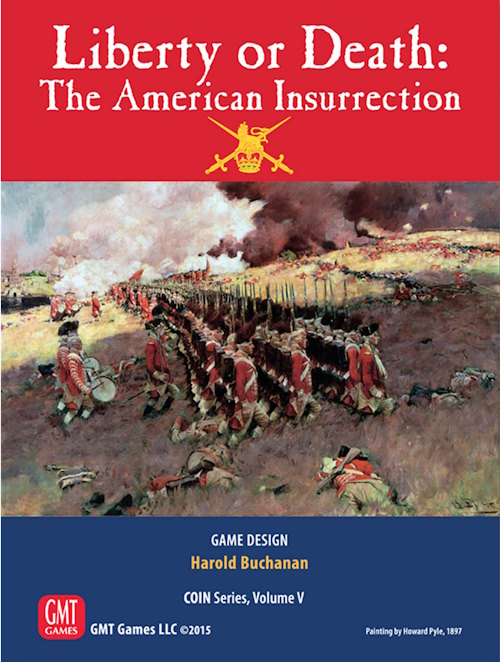 beyond CRTs, step losses, and orders of battle. Liberty or Death is a COIN for the American Revolution, setting four sides (British, French, American, and Iroquis) into a pitched arena. Often arrayed as an almost 2v2 COIN, though with only one winner, Liberty or Death leans heavier, but provides robust bot support for solitaire, two, or three-player games. That bot support gives Liberty the advantage of being more playable than some of its simpler peers, simply because you don’t need a full table to give it a crack.
When you do, you’ll find a fascinating mix of options. The British have massive power but problems arise everywhere – choosing where to send Howe and Gage is paramount, as those pesky Patriots will keep you shadowboxing at ghosts. The French have to keep the Patriots alive and threatening while you leverage spy-craft and political savvy to bring your own military ashore. And the Iroquois? Help the British, sure, but how much? Can you defend your villages from the Patriots while making necessary incursions?
The dance above comes by way of COIN’s usual event card deck, letting players pick and choose the best time for actions. Going now means you may not be able to act later, but taking advantage of key events is paramount, as is positioning yourself to do so. Liberty or Death grows with repeated plays as you and your group learn the deck, the counters, and the sneaky moves to make with every faction. It’s a game that you could plausibly play for 250 years without getting bored, and that’s quite the praise.
Scarface 1920
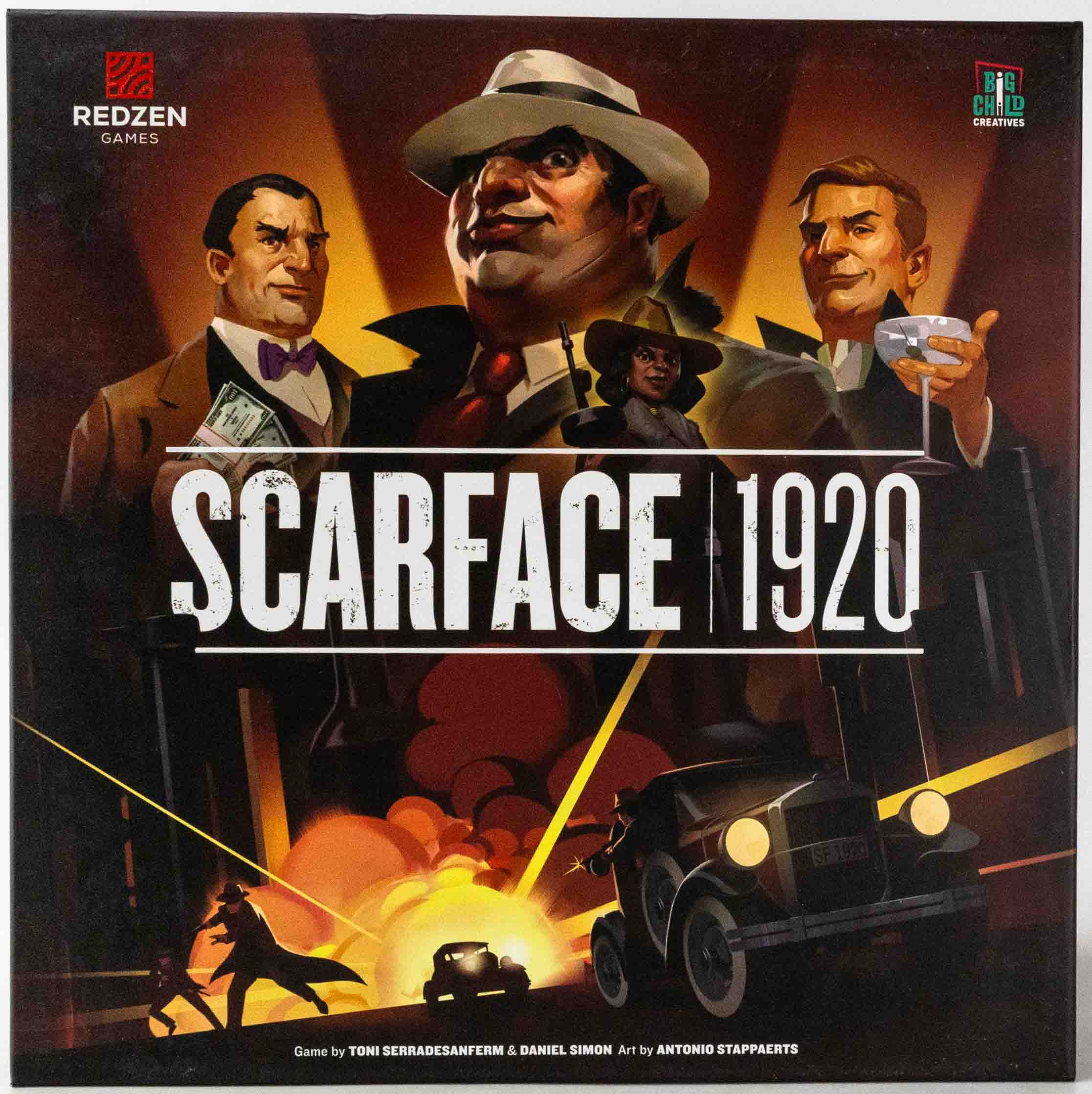 Scarface, you say? The gangster movie? Well, Scarface 1920 doesn’t have Al Pacino on its box, but it is stuffed with gangsters and all the machinations that go along with bringing a criminal enterprise to the fore. It’s an American story: gathering your ruffians, taking territory, bribing and coercing cops and politicians to your end.
Scarface 1920 sees you doing all of those things in a swanky production built around area-majority gameplay, coupled with deck-building and worker placement. Every gang and their boss is different, and you’ll have to make crooked choices about how to best grow your criminal enterprise while knocking your competitors down a notch. That takedown can come through direct means, like stealing cash from a rival, or more subtle, like nabbing an associate with abilities your opponent might find useful. Looming over all the action is the impending doom courtesy of the FBI, whose vice is closing on the game, and whose efforts will get your co-conspirators jailed.
Getting your goons back on the streets is just one job for a mobster.
What makes Scarface sing for this piece is its commitment to theme. It’s a hardscrabble world, where you’re selling what you have in hopes that the next big job will let you get ahead. There’s pressure from all sides, but with a little luck and clever use of your gang’s unique strengths, you might come out ahead. It’s, uh, the American Dream.
This isn’t a light game, and the constant conflict means it’ll feel more like a war game than a normal euro, but Scarface can work to bridge the gap for a group curious about more interactive titles hesitant to take the plunge into more traditional war games. I also highly suggest fedoras, cigars, and bad accents while playing to really bring the whole thing together.
Triumph and Tragedy and Conquest and Consequence
I’ll admit to a bit of self-serving here, as I’m pointing you to these games in hopes GMT’s P500 (a pre-order to print system) gets enough orders to print Conquest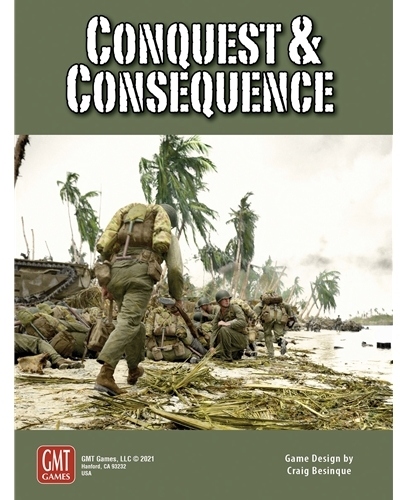 and Tragedy expansion bringing these two titles together in an epic political block war game bash.
Triumph and Tragedy and its sister title, Conquest and Consequence, explore the European and Pacific theaters of WWII (respectively) with less an eye towards big War Room-style clashes and more focus on broader, national perspectives. Both games begin in 1936, well before the main conflict breaks out, and give players the opportunity to explore new narratives.
In Conquest and Consequence, you’ll have to decide, as the US, whether to focus your efforts on naval tech, defending bases, helping the Chinese nationalists (which start under your control, a common move in Pacific Theater games to give the US player some battle action early on), and more. Japan could eschew the southern route and plunge right into Siberia, or perhaps they’ll ignore the Soviets entirely and both sides will pursue their own ends. The European theater of Triumph and Tragedy runs in a same-but-different fashion, with Germany driving momentum while the US player (also controlling Britain) must decide how to counter their efforts (along with the Soviets).
These are block war games where you’ll use action cards to command your forces, adjust allegiances, research tech, and so on. The broad menu of actions ensures you’ll never be able to do everything you want (nor will your opponents!), so you’ll have to find opportunities to spring surprise attacks or avoid the same in hopes of extending peaceful build-up for a little while longer. Because your units are ‘hidden’ until combat or, occasionally, skullduggery, reveals them, the bluffing element in these games is sublime.
In both games, you’ll find victory possible through technology (first to build the atomic bomb) or achieving economic superiority. That alone makes these games pretty unique among war games in this era, and digs you into broader elements leading to the US’s victory in that war and their general strength after. If you’ve only played Axis and Allies or more battle-focused WWII games, this is your invitation to check out a wonderful pair of 3-player titles that give you a very different picture.
As an aside, Churchill works here as a WWII political game, and I’d recommend it if you want something a bit smaller in scope (but not much in play time).
Twilight Struggle
This classic is everything you could want in exploring the Cold War-era political machinations between the US and Soviet Union. It’s been covered to death, but 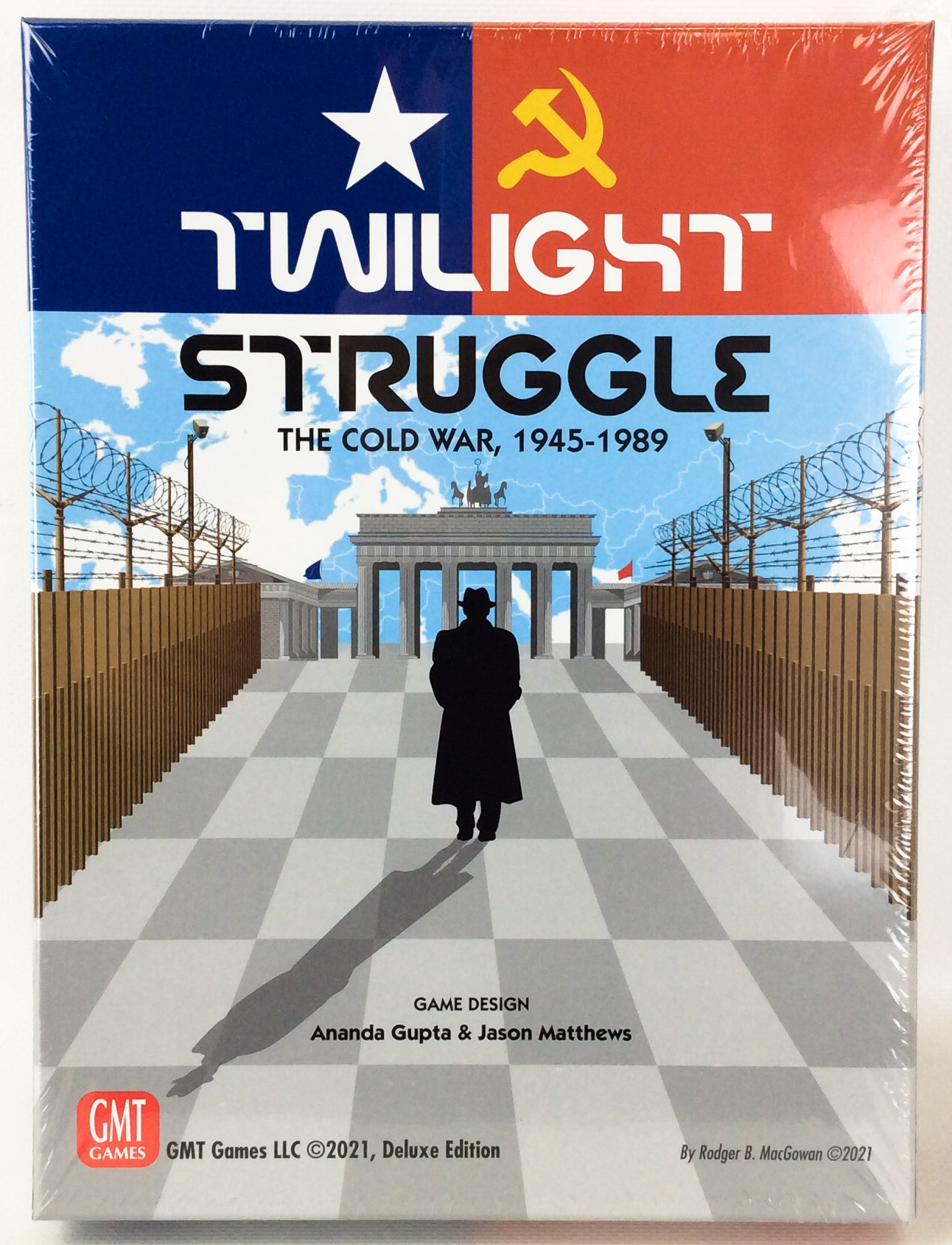 its tense back-and-forth balancing of real-world events, shifting alliances, and the attempts to get close without triggering nuclear war remains nigh unmatched decades after its initial release.
From a US perspective, playing Twilight Struggle is both patriotic and humbling. You’ll touch on great triumphs like the Apollo program and NATO, while taking the lumps that come from Vietnam and CIA coups gone wrong. At the same time, those will be paralleled with key cards knocking the Soviet Union, bringing about their collapse over the course of a few hours. It’s living history bolstered with a devious dice.
If you’re completely new to the game, congratulations, I’m jealous. Twilight Struggle generally plays in classic CDG fashion, where both players have a hand and alternate playing a card for ‘ops’ points, which are used to shift global alliances, trigger coups, progress in the space race, and so on. Regions, like Europe, Asia, etc. score periodically, and if the VPs swing too far in either side’s direction, that’s the game. Every card, too, has an event that can be used by one of the players to bring history into play, marking big swings and putting Twilight Struggle in the realm of games best enjoyed with a consistent play partner.
But should you find one—and Twilight Struggle is viable for new war gamers—then you are in for a treat, a game ready to give you many, many great nights.
Imperial 2030
Going into the future, there are fewer politically-oriented war games out there. One of the best, albeit one hard to find, is Imperial 2030, a game that puts you and the other players as investors in a near-future world where six powers act under your influence. In an at-times-true-to-life setup, players with the most money invested in a given power, like the US, Brazil, or China, get to do their actions. The key here is that the changing economic climate means you’re less interested in conquering the world than fattening your bank account, so you’ll want to guide the powers into places that’ll be good for your balance sheet.
It’s a fascinating experiment, a cutthroat game where clever play opportunities abound. You might find yourself avoiding control of any nations just to use your financial sway at the right time. The only game on this list best at five or six, and playable in an afternoon, Imperial 2030 (or its historical counterpart, Imperial) are gems.


