
The sound of cracking baseball bats marks the start of spring, and few board games conjure up that same feeling more than Strat-O-Matic Baseball, an ongoing system that’s been delighting players since the early 1960s. Usually I’d follow up a statement like that with some qualifier about how quality transcends time, but Strat-O-Matic (otherwise known as S-O-M) isn’t just a trip back to old memories. This is a living, breathing game that marries past and present with some dice, some numbers, and classic baseball magic.
Beyond S-O-M, we’ll also look at other sports simulations, including Strat-O-Matic’s other titles. Keep in mind that most of these games are designed for solo play. They come in portable packages, great for travel or lunch break sessions, and, with simpler rules to drive the sports story-telling, make excellent gifts for the sports fan in your life. Or, you know, for yourself, because obviously.
The Strat-O-Matic Baseball Experience
Simulation is a word often seen in war games, but harder to pull off in sports titles (Blood Bowl might be a solid metaphor for the NFL, but until we see an Ork on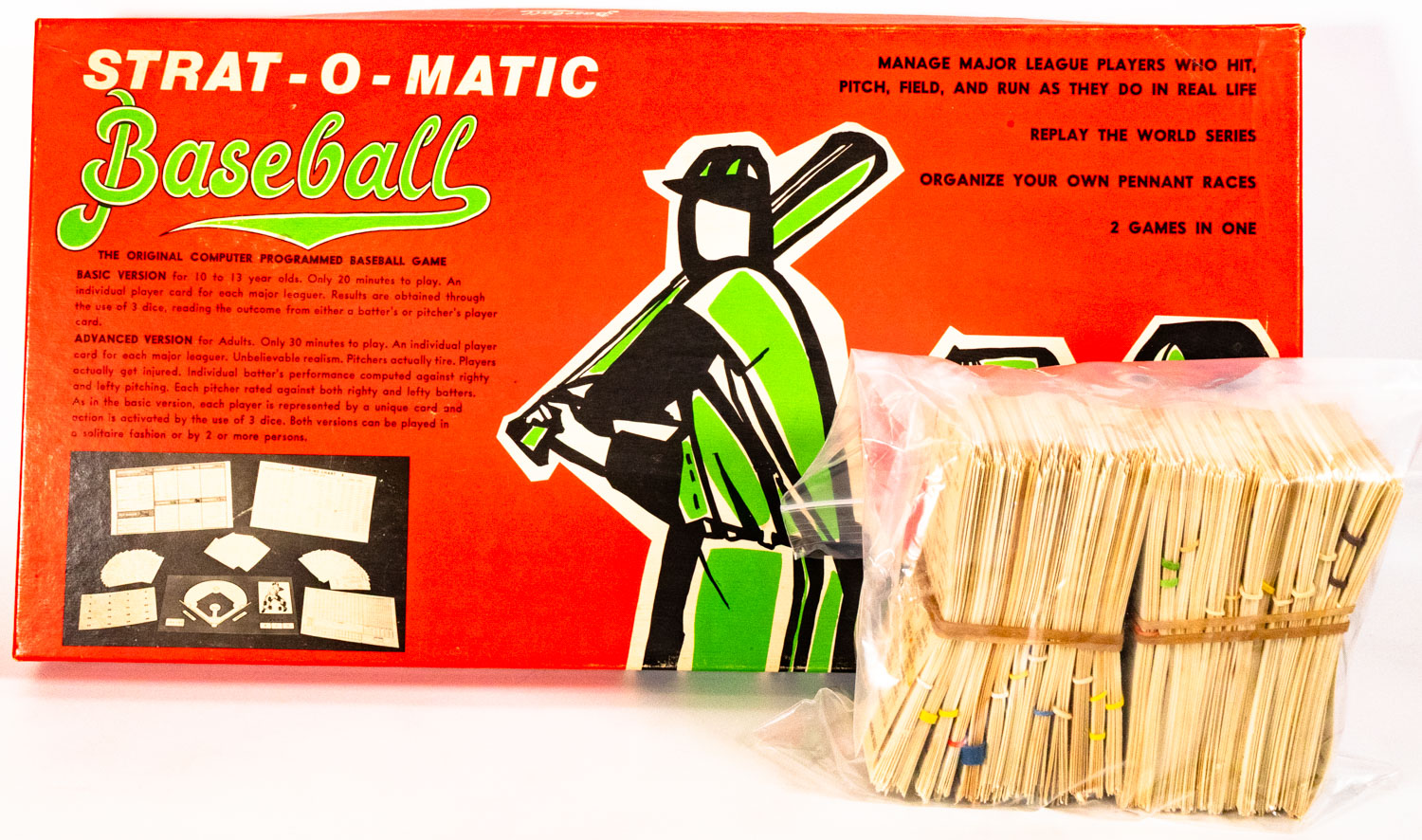 the field, it isn’t a simulation). S-O-M aims for statistical balance in its outcomes, meaning that you’ll still get rousing, incredible home runs, double plays, and the like, but those results will feel earned rather than absurd. This happens through the game’s core mechanic, and the thing that’s let S-O-M thrive for the last six decades.
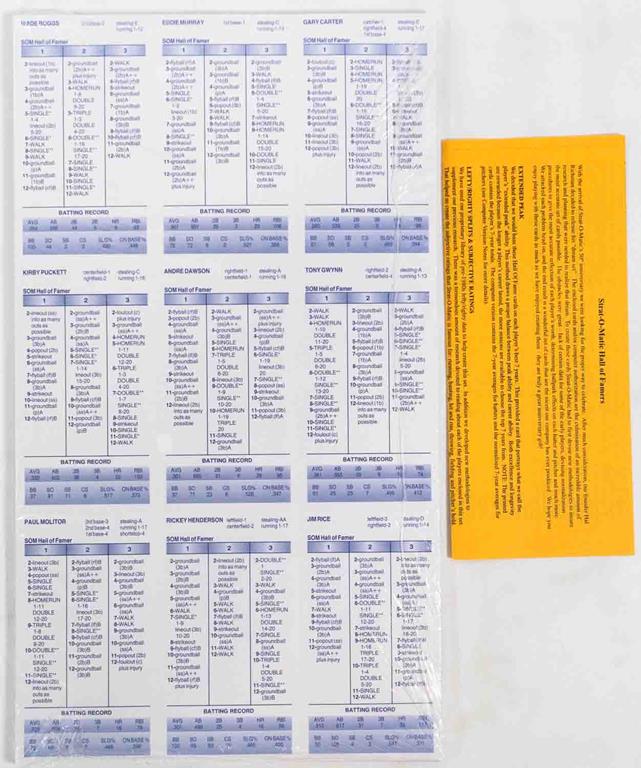
See, S-O-M runs on cards. Pitcher and batter cards, specifically, with sets released every season for every team. Each of these cards lists the player and their abilities, represented by columns and dice values. In fact, they’re more or less war gaming CRTs, but rather than one used for the whole game, you get a unique version for every unit. That might sound nightmarish until you remember baseball is functionally a series of one-on-one duels between pitchers and batters. So, when you’re playing, you’ll have a pitcher card out and pull the next batter to face it.
Then come the dice. A white and two red six-sided cubes. The white is a 50-50 shot at whose card gets used for the result, often favoring the winner. The two red dice get added up, and the total compared to a line on the card. That line tells you what happened – a walk, a single, an out, and so on. A potential d20 roll acts as an X-factor, turning that single into a double or a line drive into a home run. The play resolves, the next batter comes up, and we’re rolling. So far, so chance-driven, right?
Well, sort of. S-O-M offers a bevy of ways to fold strategy into its rolling realm. First and foremost are the rules. Described above are the basic rules, meant for speedy, fun, and breezy play. Advanced and Super Advanced add in all sorts of additional stats and potential results. Things like a left-handed pitcher against a righty batter, or a player’s tendency to steal bases. The best part about these additional rules is that they’re all small and one-offs. You can mix-and-match the rules you want to create a thrilling simulation that hits your complexity sweet spot.
Then come the play modes. A single game might come down to some lucky rolls, but S-O-M is built for league play. Grab some buddies, pick some teams (or join an existing league – you can find plenty on Strat-O-Matic’s website), and suddenly you have a living baseball season in your living room (or down at the local bar – S-O-M fits fine on a smaller table). Choosing pitchers, managing line-ups, and laughing with friends as fortunes rise and fall over a season is as good as any huge campaign game out there at a fraction of the cost, time, and setup requirements.
How to build a Strat-o-Matic Collection
You might’ve noticed back there that Strat-O-Matic publishes rosters every season and has been running since the early 60s. How then would a new S-O-M player (or one wanting to relive vague childhood memories) get started?
First, you’ll have to grab a boxed version of the game, and for that, I’d recommend one of the current editions. While S-O-M hasn’t changed drastically over the years (to its benefit), you’ll enjoy improved components in the newer versions. From there, you’ll likely want at least one complete card set – complete here meaning the entire MLB, not just the American or National leagues. That way you’ll be able to run any sort of game you’d like, from seasons to series or single matches.
 When looking at seasons, be aware that older seasons tend to be more expensive (S-O-M even calls this out on the box – you can ‘invest’ with this game!). Particularly years with stacked rosters or famous teams. Noble Knight has a pretty solid selection of seasons, and you can find more on the secondary market. If you’re just starting out, though, I’d give it a whirl with any package that comes with your boxed game, or pick an affordable season. If the game clicks, then you can embrace the collector’s mindset.
You can also spice things up with comparatively inexpensive Hall of Fame sets, letting you sub in legendary players from various years into your teams to introduce variety, game out hypotheticals, or settle arguments once and for all (a dice roll, obviously, is the most definitive solution to any debate).
In a sense, S-O-M is akin to getting into Magic, Warhammer, or any number of collectible games. You’re buying into a system knowing that there’s countless hours of fun and strategy to be had, with another card set to grab whenever your current collection feels a little played out.
All told, S-O-M is a sports simulation done at your speed, with minimal fuss, setup time, or giant boxes. Even if you don’t like baseball.
Simulation Across the Sports
Sports simulation is a neat category of board gaming. While S-O-M has longevity on its side, here are other options across a variety of different sports:
Baseball
- Replay Baseball – Originally from 1973 (though with a revised edition in 2022), Replay Baseball offers a different spin on the simulation formula. You’re still rolling dice and comparing player stats and charts to determine what happens, but things like base stealing are more automated. If S-O-M is too finicky for you, check this out.
Hockey
- Hockey Blast Pro – Cards and dice overlayed on an ice rink, Hockey Blast cares are the feel of the game, with dice rolls driving intervals of play rather than action-by-action. In other words, you’ll experience the scores and big moments without needing to roll through every second. Many seasons and teams are available as online PDFs too, letting you print and cut out your favorites (which might seem like work – but it’s better than rosters being eternally out of print).
Golf
- History Maker Golf – Roll and Write hits the links here, but the golfers (all actual PGA tour players) have dynamism beyond numbers thanks to keyword traits. Dice drive the action, but the well-balanced stats keep things realistic – those underdog upsets are thrilling rarities. Coupled with an excellent tournament mode, this is a great gateway into sports simulations.

Football (American)
- Second Season Pro Football – Plaay (the same publishers of Hockey Blast Pro) offer up another great sports simulation here, following the standard model with yearly roster sets. Charts and dice are here, along with simple player stats across offense and defense (0-2, with 2 being great and 0 being… not) keep play moving, but the star is the book used to drive the action. Rather than a flat yard or two, an incomplete pass, and so on, the book gives short, vivid descriptions (and sometimes call for further rolls to add on to a play) that bring the game to life. Pick a season, draft a new roster, and enjoy.
Basketball
- 4th Street Basketball – Color-coded dice, the ability to model collegiate or pro basketball, and swaths of individual player ratings give 4th Street’s basketball situation character and depth. The colorful board, with spots to track timeouts, player fatigue, the clock, and where on the court everyone is elevates this beyond the spreadsheet feel many simulations create. Still actively produced, you can grab NBA or power conference rosters from 2019-on.
Soccer
- Dice United – More about the excitement of a match than about the quality of a first touch or a defender’s position, Dice United gives you an overhead view of a game in about 15 minutes, blazing through key moments through (you guessed it) a tuned d20/d100 dice system. With a bevy of leagues and the option to play a manager’s mode for a (little) more control, Dice United is an easy, fun way to play through a season (including by creating your own league).
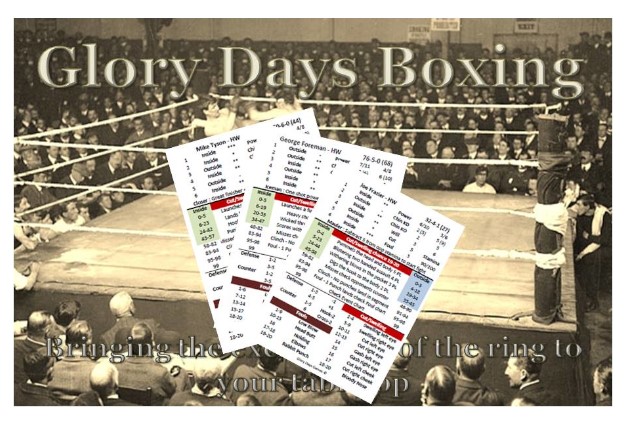
Beyond those bigger ones, simulation enthusiasts can find ways to play out almost any sport out there. Boxing, bowling, and roller derby (bet you didn’t expect that one) all get great treatment from publishers. If you’re a fan of seeing sports narratives play out through the roll of a dice, then this entire genre is a gold mine of great times.


