
Continuing our celebration of another great year in board gaming, here are twelve great titles square in that ‘medium’ complexity zone. We’re talking games a notch more complicated or tense than in our last piece. With a good grasp of the rules and a ready audience, you can teach, play, and enjoy these games from the start, and most won’t take more than an hour or two (though some of the campaigns here can last you a year). So dive in, add some great titles to your want list (or your holiday shopping list), and have some fun.
Making its way over from Japan, Eternal Decks plays a bit like The Crew and Aeon’s End were spun together in an eldritch blender. We’re talking a co-op deck-builder… sort of. You’ll start with a slim hand and an objective, like defeat a boss, collect a certain number of point types, and so on depending on your mission. You and your pals will take turns doing actions, like getting new cards, while working towards that goal with limited communication. Fail to achieve it before one player runs out of actions they can perform, and you’re toast. Simple rules, gorgeous artwork, and a wide variety of missions make Eternal Decks a striking choice on game night. Be sure to Want List this one, though, as it’s going to be hard to find.
2. The Lord of the Rings – Fellowship of the Ring
Not so small is Fate of the Fellowship, a Pandemic fork given the Lord of the Rings makeover. That alone might either sell you on this game or drive you away, but what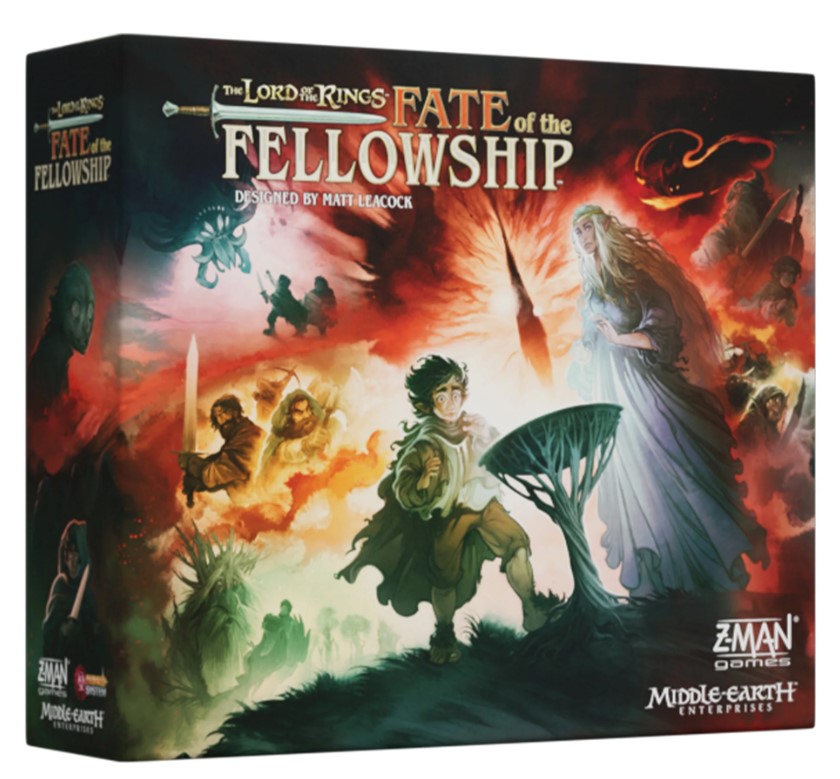 kept me coming back was how much it changed from Pandemic’s pure action optimization. Most players here get two unique characters (I’m betting you can guess most of’em), and their abilities are more dynamic than the disease fighters of yore. You’ll also be up against orcs and Nazgûl, which move dynamically to conquer territory and chase you. Objectives to win cover a broad range too, though you’ll always be racing to Mt. Doom with Frodo. All told, it’s a cinematic experience, with narrative popping even when the cards deliver disaster. If you’re a fan of Lord of the Rings, Pandemic, or co-op fantasy, this is 2025’s winner.
Ah, that age-old coupling of Lewis and Clarke with hideous fantasy monstrosities. Corps of Discovery, based on the Manifest Destiny comics, continues the cooperative vibe of this piece by sending you and your friends (or, more easily than the other two, a solo experience) on a harrowing adventure into the North American wilds. You’ll explore a shifting grid, gathering resources and hunting beasties through deduction, while dealing with various challenges through crisis cards. For example, you might need a mushroom for a meal, but both finding it and getting it past a great frog monster requires plotting your movements based on clues on the board. Do it right, and your expedition survives another day. Do it wrong and, well, that frog monster’s getting dinner. Corps of Discovery is a fresh survival co-op with just the right amount of tension to keep you engaged.
You might expect to see a giant fantasy campaign game in our next piece, but Arydia isn’t all that heavy. With a focus on choice and player-driven narrative, the rules aren’t a tome and the play is fast. Combat plays out on small maps, keeping you in the game rather than fishing for tiles. The production is huge, but it benefits hugely from experience, providing an effective storage solution out of the box, rather than requiring third-party inserts. In other words, even if you can’t leave this one set up during your grand adventure, it’s easy to break out for a fun session.
On the heavier end of this list, Galactic Cruise rightfully earned tons of plaudits this year for its melding of euro worker-placement with a killer theme (it’s right there in the title). Borrowing kick-out actions from Vital Lacerda and making sure player actions impact everyone—for example, taking an agenda card reveals a bonus another player can grab—keeps the table engaged. It’s immensely satisfying to send your custom ships on space-vacations. The tying of action to theme here is so tight it makes the game feel lighter than its rules suggest, making Galactic Cruise one of 2025’s great level-up games.
Cute animals, heroes, and card… dancing? Emberleaf sneaks in towards the end of the year with a peanut butter and chocolate mix of euro mechanics. You’ll start with a hero looking to rebuild their home, using their abilities via cards to gather resources, defeat monsters, rebuild, and score heaps of points. Like last year’s The White Castle, combo play reigns supreme, keeping you engaged to get the maximum value from your actions. Don’t let the cute production fool you either – there’s plenty of depth to mine here.
7. Unstoppable
John D. Claire’s Unstoppable is a dynamo. A battling deck-builder for solo or cooperative duos, Unstoppable sees you theoretically working to upgrade your deck so you can defeat a big bad at the end, but what it’s really about is COMBOS. You know what I’m talking about – that sweet sensation where you toast an enemy, unlocking upgrades and additional cards that chain into more attacks, driving you towards victory. Or, because upgrades in Unstoppable buff enemies, a ruthless defeat. Make no mistake, this isn’t an easy game, but it is rewarding.
Pokemon Master Trainer was, at its time, a glimmer of what was possible with a creature-collecting board game. Dragon Eclipse realizes the whole show, with its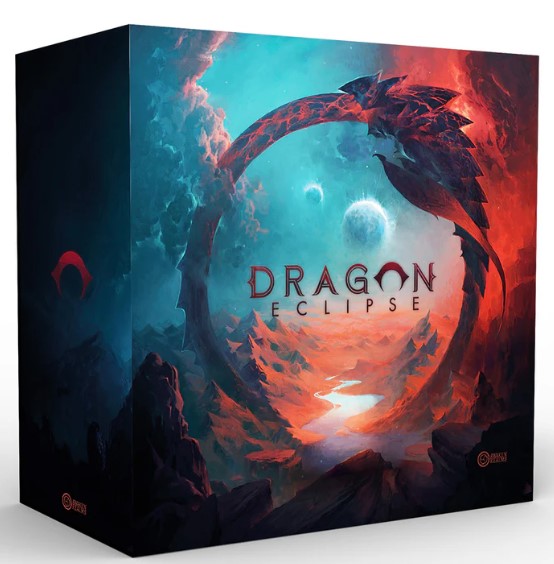 mystlings taking the place of Nintendo’s critters in an approachable campaign best explored solitaire or as a duo (you can also square off in arenas). Your mystlings, once captured, come with a unique card deck that you’ll build with booster pack rewards. It’s easy to learn, tactically engaging, and, with the app, flows well enough that your grade-school kids will want to jump in with you.
Last year, HALO: Flashpoint emerged as the new version of gnarly miniatures game Deadzone and quickly proved to be an exceptionally entertaining entry into a crowded space. Its small figure count, easy-to-play rules, and cinematic gameplay coupled with objective-focused matches (the respawn mechanic alone keeps games from snowballing hard on a lucky hit or two) made it an easy recommendation, even if you weren’t deep into Halo lore. This year, with the new War Games expansion, Flashpoint has grown into a proper skirmish title, with points lists and army rules, letting you hone your preferred fighting force rather than rely on drafting randomness. Oh, and they threw in a new faction from ODST (those shock troopers), and, uh, Halo’s standard-bearer, the good ol’ Master Chief. If you want a miniatures game that you’ll actually play, with minimal assembly fussiness, then Flashpoint is your game.
10. Star Wars – Battle for Hoth
Giving Memoir ‘44 a refresh and the Star Wars IP was an inspired decision backed up with a quality production. We’re talking asymmetric sides, hand management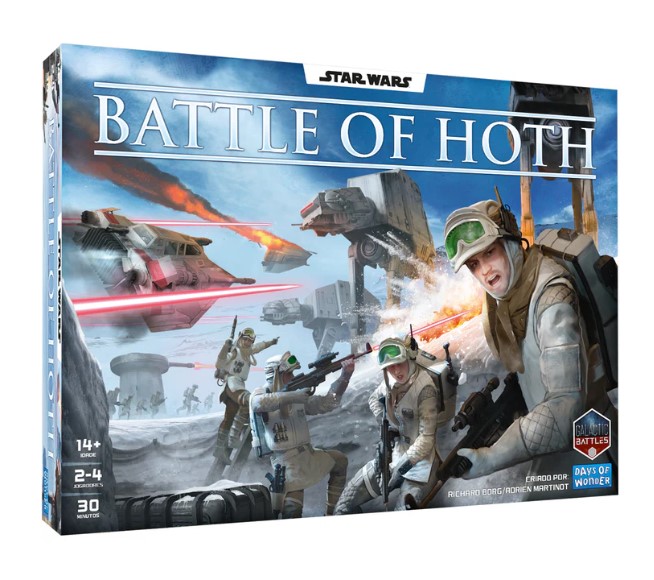 that drives unit activation, dice chucking, and a big collection of scenarios. Rebels, imperials, snow, and a hex-based war game with easy-to learn rules? Yes please. And you can combine copies with a pal to have a huge match if you want. That it serves as an introduction to the venerable Commands and Colors system is icing on the Hoth cake. Of all the games on this list, Battle of Hoth is probably the easiest to find, and easiest to get to the table. Which is a great thing, as it’s a great time.
Moonrakers, a nifty negotiation game, has spawned a pseudo-sequel in Brink, which is essentially a sci-fi 4x worker placement game (I’m sure I could find more buzzwords) that stands out from a crowded field thanks to its trading and negotiation element. Unlike so many euros, interaction is a core part of Brink, whether you’re trading resources or, in the most intriguing element, voting a faction into power at the end of every round. See, each faction has a color, as do all the hexes making up the board. When you vote, say, red into power, everyone scores based on the number of red hexes they control. This has you wheeling and dealing all game long, trading spaces for votes, cash, and just about anything else. If your group enjoys things like Chinatown, Sidereal Confluence, or Zoo Vadis, make sure to give Brink a look.
Every year, it seems like the worker placement concept might be played out… but then you get Galactic Cruise and, in the fantasy space, Kinfire Council. Like all of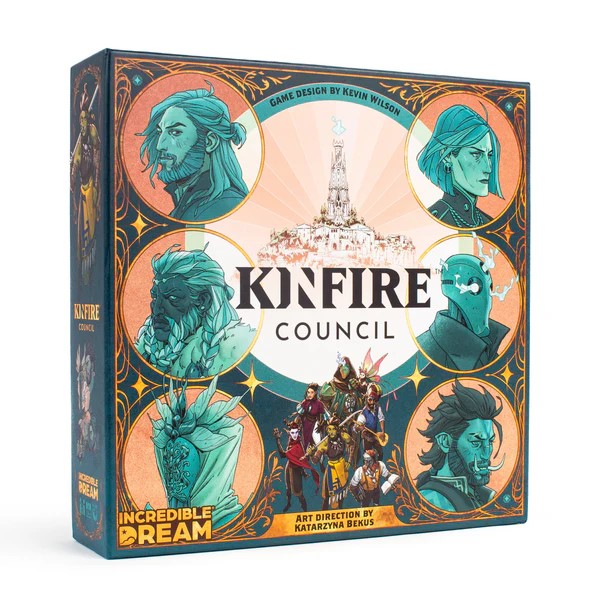 the Kinfire games, Council has a stunning production that you’ll use to undermine each other in this semi-coop contest to rebuild and defend your city. Rather than exceptionally tight, limited spaces, Council gives you options aplenty. Balancing pursuing your own points with thwarting the other players is where the juice in this one lies – if you’re hunting a more knives-out worker placement game this year, Kinfire Council is one to hunt down.


